• Phenology and Phenomenology

    Phenology is about understanding the relationship between natural events. For example, deciduous fruit trees flower after their chill hours are met, once certain daylength and soil temperature conditions occur. Many pollinators start their season after spending a certain amount of time in a semi-dormant state (diapause) followed by several consecutive days and nights of warm temperatures.

    Even though these two events have different underlying alarm clocks to initiate them, they typically start at about the same time. That’s why gardeners often connect the flowering of fruit trees with the start of the pollinator season.

    Phenological Complexity

    The start of pollinator season normally gives way to more bird activity too. Some birds are migratory birds that fly in from out of town as the weather warms. Their arrival time is triggered by conditions at their overwintering grounds that tell them it’s time to move to breeding grounds.

    Many local birds stay put through winter surviving on forage, storage, natural adaptation, and cozy places to stay warm. They become more active and mate when they begin to find certain key food sources like their favorite kinds of caterpillars more abundant.

    So, again, it’s two different sets of phenological conditions — migratory triggers and local food experience — that initiate increases in bird populations in one location. And, often local bird and migratory bird populations increase simultaneously. But because they both happen in response to different underlying phenological cycles, they may not always coincide.

    Good Year/Bad Year

    In a good year, fruit trees flower just as pollinating insects awaken to eat their nectar and transfer pollen while they mate and reproduce. As the pollinator larva size up, birds eat some of them and begin to lay and sit nests. Then, their young offspring leave the nest just in time to help control warm season pest populations that might otherwise get out of hand.

    In this scenario, gardeners get good fruit set from their well-pollinated trees plus plenty of bird song and natural pest control from thriving bird populations.

    Unfortunately, sometimes trees don’t flower due to insufficient chill hours. Or a hard freeze kills the buds. Then early pollinating insects are left hungry so they reproduce less. Birds then have less to eat. So they lay fewer eggs, don’t sit nests, or raise fewer young successfully.

    Also, sometimes trees flower before pollinators wake up leaving fewer flowers pollinated. That leads to less insect larva and fewer birds too.

    These two completely different, unrelated problems – insufficient chill hours or early flowering/late insect diapause – can lead to similar negative outcomes.

    When the phenological events don’t add up to a good year, gardeners can have poor fruit set. Plus, there might be more pest problems as warm season insects break diapause and feast on crops, unchecked by less abundant bird populations.

    At home, there’s not much we can do about insufficient chill hours for existing trees. But because organic gardeners have long been aware of this particular set of phenological possibilities, we frequently do the following to mitigate risks.

    • Select and plant fruit trees with varying chill hour requirements.
    • Manually pollinate in unexpectedly cool weather to stave off that poor fruit set problem.
    • Offer an array of plants with different flowering periods to support pollinators, and subsequently birds, to ensure they continue to populate the landscape.
    • Increase pollinator populations by leaving plant debris near our gardens, offering mason bee housing, butterfly shelters, or keeping honey bees that forage year-round on warm days.
    • Feed birds directly to maintain their population, while keeping them from depleting pollinator populations in challenging years.

    This is sort of the heart of gardening. We work within the context of the phenological events that occur in our ecosystem. But we intervene to mitigate the impacts of phenological mismatches that might negatively impact our gardening goals.

    Weed Phenology

    Plants we tend to call weeds are another perfect example of phenological complexity and opportunities for gardener interventions.

    Auto-Germinators

    Some weeds are auto-germinators that don’t go dormant. They just lie on or under the surface of soil waiting for 10 hours of daylight or a few warm days to trigger them to begin grow.

    These weeds are the phenological response to too few plants or insufficient mulch to block light and prevent germination.

    Semi-Dormant Seeds

    Other weed seeds are semi-dormant. They aren’t really sleeping. They are in a meditative state, tuned into their surroundings, waiting for a few conditions to align and let them know it’s safe to grow. They may need warming soil temperatures to trigger an increase in bacterial activity and nitrogen rich rains to filter into the soil. Or they may need excessively dry conditions and heat to oxidize soil and weather away their outer seed coatings.

    When these weeds germinate it’s phenological evidence that the soil is experiencing erratic events rather than the stable conditions most cultivated plants prefer. Depending on what germinates, we can figure out what needs to be done to stabilize soil.

    Dormant Seeds

    Some weed seeds are genuinely dormant and can remain so for decades. Those truly dormant seeds are in a cryogenic-like sleep, preserved until catastrophic soil events force them out of dormancy.

    It could be a change in soil pH caused by a gardener applying lime, sulfur, or hot compost. Gardening practices like using salt-based fertilizers, regular tilling, or excessive over and under watering also cause seeds to break natural dormancy. Acid rain, fire, flood, invasive species altering soil chemistry, and digging pests are some natural causes.

    When these weeds happen, gardeners can study the environmental conditions and practices to determine what big phenological changes forced those dormant seeds to germinate. Then, we can decide how to strategically address the cause and control weeds until the soil stabilizes again.

    Nature’s Mind

    Nature has a reason for causing weeds to germinate at specific times and places just as it does for tying pollinators to different alarm clocks than fruit trees.

    We may not always be able to see why, understand the reasoning, or agree with nature’s logic for how this all works. But by becoming more aware of these phenological processes in our environment, we can begin to understand nature’s mind.

    Now, I don’t think of nature as a person. I may sometimes say Mother Nature just as a short hand way of referring to the collective intelligence at work all around us. But my view of nature is as a collection of intelligent systems that are complexly interconnected. Also, many of these systems are automated, meaning that they are already set to occur when certain conditions are met.

    If I eat food, my body starts digesting and microorganisms get to work converting that food to energy and nutrients. I don’t have to tell them to do this or even be aware that it is happening.

    When we feed our soil compost or harvest food, the same thing happens. The processing of whatever we put in or on soil, or the adjustment to whatever we take out, is automated. And we can’t stop that from happening.

    To some degree, though, we can influence outcomes. By eating healthier foods, we ensure that the digestion that takes place has more positive impacts on our well-being. To replace what we harvest, we can feed our soil aged, quality compost or light layers of high-carbon, low nitrogen mulches and support beneficial microlife. Whereas by placing fresh manure or just cooled compost on our soil, we may temporarily promote dangerous pathogens or anaerobic and thermophilic bacteria that don’t support plant growth.

    These automated systems sometimes seem mysterious because they are far too complex for us to comprehend in their entirety. However, that doesn’t mean we can’t interact successfully with them and even leverage them for our benefit.

    Phenological Connections

    The way to leverage our limited understanding of phenology is to make connections that are personal to us. For example, when our plum trees flower, I know the peaches will come next followed by pears, quinces, and apples.

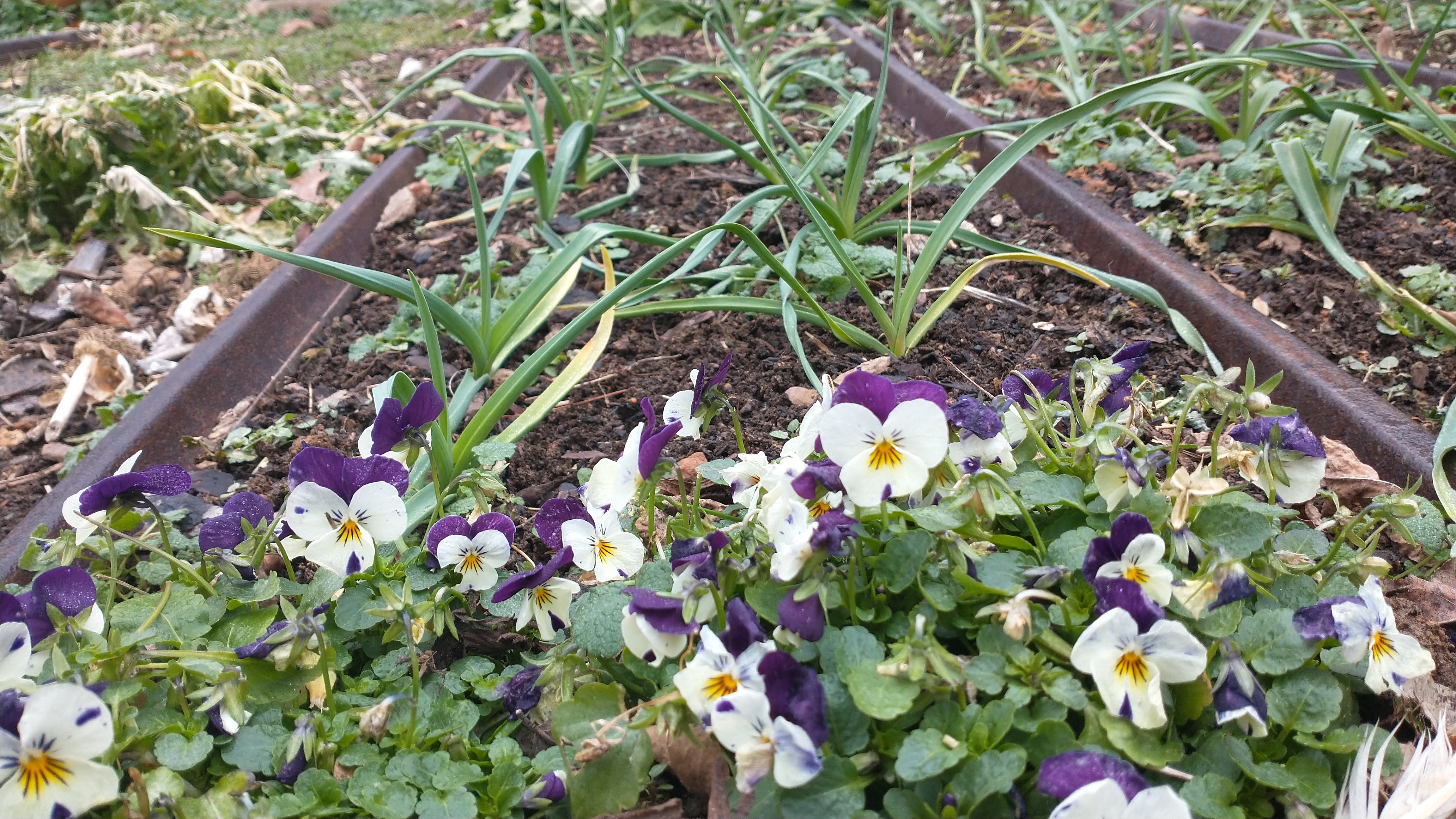
    Additionally, I know the violets flower with the plums and peaches. So that’s when I start looking for them to harvest their flowers for infusions or plate decorations. The deadnettle and henbit begin to flower with the plums and go through until when the apples flower. I let them flower to feed the pollinators. Then I start collecting the older plants to give to feed to the ducks and chickens before they set too many seeds.

    Other connections help me decide when to plant annuals. Like when my biennial fennel starts growing well, I know it’s time to sow lettuce and turnips. When my over-wintered collards begin to flower, peas are safe.

    Weather Interruptions

    It’s important to note that weather events such as an unexpected hard freeze can interrupt phenological events. Even in nature, as we saw with those earlier examples, phenological mismatches occur and processes fail as a result.

    Tying our gardening activities to phenological activities is a starting point, but not a a perfect answer for when to plant or perform specific chores.

    We must also check the forecast and grow non-hardy plants indoors to keep safe until after the risk of frost. Row covers, cloches, or cold frames may also be needed to mitigate early cold and still successfully grow marginal crops in a certain area.

    Record-Keeping

    Phenology is learned by observing seasonal cycles, taking notes, and reflecting from year to year to make connections.

    • Track dates when leafing or flowering happens.
    • Keep records of harvests and the conditions that led to good or bad years.
    • Identify, study, and record when pests or pollinators start showing up or what conditions are present when they are prolific or controlled.

    This kind of attention to detail will develop more thorough phenological knowledge of your landscape. Then, refer back to these records annually to note differences.

    Phenology is extremely localized. So, only you can make these connections by studying and attempting to understand how things work in your landscape. But you can figure out what to pay attention to by reading and researching articles about natural cycles and systems in your region.

    Experimentation is also necessary to take advantage of the phenological processes at work in our environment. This is where phenomenology comes into play.

    Phenomenology

    Horseradish and mustard are flowering as garlic and chicory are sizing up in early spring. This is also about when mouse-ear chickweed, Persian speedwell, and hairy vetch begin to spread if I don’t control them earlier.

    Phenomenology is related to, but not the same as phenology. It’s a kind of parascientific process wherein you learn from and interact with phenomena like (phenological events in your garden) even when you can’t fully understand them.

    For example, there is no way I can understand the phenological complexity at work in even a teaspoon of good soil. There is simply too much life, too many connections, and not enough scientific knowledge about the lifecycle and phenological actions of the organisms in soil.

    Yet, I can still understand things about soil by taking the scientific knowledge I’ve read about, adding in my observations, and picking up subliminal cues that my cells sense even when my conscious brain misses them. Then, I can use this subjective “knowing” or “intuition” to interact with the phenomena that comprise living soil.

    I also think that there’s an element of energetic communication that our rational, western kind of thinking rejects simply because we don’t understand how it works. If you’ve ever been drawn to a person or a place for no apparent reason or known you needed to call someone far away, then you understand this.

    In the garden, I swear sometimes plants communicate what they are running out of in the soil even before they show signs of deficiency. Plants also “tell me” where they want to live. It’s as if there’s a hint of heaviness I feel when holding a potted plant near an ideal location.

    When we interact with these sensations or phenomena, either by actively following them or intentionally ignoring them to see the outcomes, we learn more about them.

    At Home with Phenology and Phenomenology

    The apple trees are leafing as the hairy vetch and mustard as a cover crop are ready to be cut back. The goji are bushing while as the strawberries are beginning to set noticeable fruit and the oregano is gaining height.

    Living in a changing climate, with rapidly evolving diseases and pathogens, a lot of old data like planting calendars or products like herbicides or pesticides simply are no longer reliable. We have to be willing to try new things to get good results in a rapidly altering world.

    You don’t need a degree to do this. But you do need enough phenological knowledge to make good guesses at how to engage the phenomena unfolding on your home. It also helps to keep up to date with emerging scientific discoveries about soil, climate, and natural systems to help link these two skills more effectively.

    As Socrates is famed for expressing, the more you know… the more you know you don’t know. Once you begin to look closely at the underlying phenological connections and complexities in just the natural systems at work on your own home, you will be amazed at how completely dependent we are on nature and how little we actually know about how it works.

    But don’t worry. You’ll also realize that you don’t have to understand everything to interact with these phenomena effectively. You just need to make an honest effort to engage and interact with these things you don’t entirely understand.

    We are natural beings and some of the knowledge for how to engage nature is already built into us. We just need to trust ourselves to try even when our rational minds don’t know why.

  • Simple Savings

    Simple Savings

    Make the good life a little more affordable with a few tried and true methods.

    Shop Deliberately

    Wanting is programmed into us as a survival tactic. If it weren’t then back when we had to hunt and forage for food, after a satisfying breakfast, we might not have felt the urgency to look for our next meal.

    Now that we’ve moved beyond the subsistence phase of human existence, though, that wanting often spurns us into unnecessary action. And that costs us in terms of money, time and cumulative maintenance.

    I know because I used to be the person that jumped into the car to run to the store for one thing. I’d walk out with three or ten things. Plus, then I’d realize how long I’d been gone, so I’d stop for takeout since I’d spent my cooking time shopping. The price of that trip also wasn’t just what I spent at the store or on fast-food. It was extra gas, more frequent oil changes, going up a mileage bracket on car insurance, and my lost time.

    Frankly, I stopped all that for environmental reasons and started gardening and making things instead. I also began writing a list of what I had to buy and sticking to it. Then, I treated shopping like an appointment and scheduled it on my calendar.

    Though my reasons for changing my habits were environmental, I was amazed at how much money and time I saved too. My gas bill dropped. I could do more at home because I wasn’t out shopping so much and that led to lots of savings. I also didn’t buy things on a whim that I later wished I’d left at the store.

    Deliberate shopping has been one of the biggest cost and time saving tools in my repertoire. And frankly, my life is so much richer for not shopping on demand. If you aren’t already shopping on a schedule, using a list, and directing that saved shopping time toward pleasurable and beneficial activities, start now!

    Save on Food

    One of the things most homesteaders recommend to save money in times of crisis is to grow food. I agree that this helps long-term. However, unless you have an established garden or amazing soil ready to grow in, and already know how to grow food, you may not save much money at first.

    I do have some tips to help you get started cheaply in my post on Potager Gardening in a Crisis. You can also read my series on starting a potager (regular harvest kitchen garden) for the longer-term. But, even before you start growing food at home, there are ways to save money on food at the grocery store right now.

    – Be Adventurous

    We often go to the grocery store with an exact idea of what we want to buy based on recipes or past habits. Then, even if costs sky-rocket we feel entitled to have those things and end up overspending to get them.

    If you instead walk into the store with a baseline for how much food you need, cash in hand to pay with, a calculator, and the mindset of creatively using sale and low cost items that fit your budget, you won’t overspend. Plus, you can have a lot of fun discovering new dishes, learning new techniques, and becoming a good home cook!

    • If onions are a dollar a pound, make a huge pot of onion soup. Roast onions and top with cheese. Make onion tarts, better known as “Pissaladière” in French cooking.
    • If potatoes are on sale, make a meal of hearty dishes like gratin, potato soup, stuffed baked potatoes, pancakes, fritters, shepherd’s pie, and so on.
    • When ballhead cabbage goes on special for a quarter a pound, make sauerkraut, Chinese cabbage salad, sear cabbage heads, or make cabbage soup.

    – Stretch Ingredients

    In the US, we have a bad habit of using only part of our vegetable purchases. We cut the greens off radishes and turnips. We use just the whites of leeks or green onions. We peel our carrots and potatoes. Those are all lost opportunities to create more flavorful, nutrient dense, meal options when put to good use.

    Leafy green tops are great in a stir fry or soup. Peelings are edible. Plus, plant sugars coalesce near the skins which means we often cut away the sweetest, most calorie dense parts of the harvest in our haste to make waste.

    With meat, we often make one meal out of portion sizes that could be spread out over multiple meals. Slice or chop meat into smaller pieces. Serve with less expensive but also nutritious rice, beans, or pasta to round out calories and achieve that full feeling.

    If you normally throw out bones and gristly meat parts, collect them with the peelings and green plant taps to make your own stock.

    Also, package your leftovers in single meal serving sizes so they are ready to take to work for lunch. Or, freeze and defrost as needed instead of buying takeout.

    – Cook Less Often

    Cooking is time consuming. But it also uses a lot of energy for heating the oven or stove top.

    If you cook in bulk you can save some of your energy costs by only heating the oven or stove once. But you will have to reheat, so the savings don’t always net out on energy usage. However, if you use those leftovers to keep your freezer stocked, that food mass freezes and insulates like ice in an icebox, cutting the time your freezer has to actively cool.

    Also, consider making meals that don’t require cooking like salads. Use fewer dishes. Then, you can cut energy spent on stove fuel and dishwasher cycles.

    – Forage

    Nature grows a lot of food for us for free. Where I live the free leafy greens season starts with corn salad and hairy bittercress. Then it moves on to dandelions and dead nettle. As those begin to flower, sow thistle sizes up and mushrooms start popping up too.

    Don’t discount nature’s abundances when looking for ways to save money on food or other resources!

    Garden for Cost Savings

    Now, I’m obviously a huge advocate for gardening. I’ve written hundreds of posts about it and two gardening books (Grow Your Own Spices and Weed-Free Gardening). But even if you don’t have the inclination to become a hardcore/self-sufficient homestead gardener, the garden can still save you big time!

    The biggest cost savings from gardening aren’t from food. They stem from the pleasure of gardening and its impact on your overall well-being. In a nutshell, having a garden makes life more pleasurable and abundant-feeling so you can live better even if you have to spend less.

    – Enriching Entertainment

    When I get the urge to run out and buy something, or when I start to lose hope in the future, I curb those empty feelings by starting a few seeds in a paper pot. I go cut myself a salad of some of the wild greens that I’ve encouraged to self sow in parts of our landscape. Perhaps I’ll cut some herbs to make an aromatic bouquet, pick some edible flowers and herbs to infuse in water, or gather weeds to feed my chickens and ducks. Or I’ll just stand under blooming trees, inhaling their incredible fragrance.

    These small actions are emotionally uplifting. They save me from going down darker, more expensive roads (like eating junk food or feeling sorry for myself). It’s hard to put a price on these benefits. But since I now live on a small fraction of my old income when I was a legal administrator and I’m so much healthier and happier than before, I’d call them huge!

    – Cottage Style Savings

    Cottage-style gardens tend to be the least expensive to start. They don’t require specific plants or formal structures. So, you can hit up friends for plant divisions. You can start a lot of easy to grow flowers or herbs from seed. You can decorate with whatever you have available or can find for free.

    The hodgepodge approach to cottage gardening also means you can work in lots of self-sowing edibles. Arugula, mustard, radish, coriander, Tulsi, dill, fennel, bush-type cherry tomatoes, and more will all come again if you let them flower, fruit, and go to seed.

    Perennial herbs like lavender, rosemary, and oregano are also inexpensive to buy. Then you can use those starts to propagate new plants to give as gifts and use to grow your garden and dried herb collection.

    Also, weeds can be welcome in this style garden. So you don’t have to worry as much about staying on top of them if you are short on time to garden.

    – Strategic Vegetable Gardening

    If you do want to start a proper vegetable garden, start small. I highly recommend setting up a vermicompost bin or making a compost bin as the first step in your garden journey. Then, focus on preparing your garden to grow the foods that you normally have to buy fresh. That way you can cut costs and extend the time between grocery visits.

    Baby lettuce is the biggest cost saver in my garden. Plus, herbs like basil and thyme cost a fortune to buy at the store but are easy to grow at home. Additionally, when you grow these at home, you save all that ridiculous plastic packaging which helps you detox your home!

    Vegetables like potatoes and onions are so cheap to buy that unless you have amazing soil to spare, growing those won’t save you much money. However, garlic, shallots, and fancy fingerling potatoes are more expensive.

    If you eat those regularly, growing your own will save you money. Plus, shallots and garlic grow through winter providing year-round garden interest. Fingerlings are out in time to start a last round of summer squash or to start your long-season winter vegetables.

    Pay attention to what you spend the most on from the produce department. Then, check with local gardeners to find out if you can reasonably grow those things in your climate.

    Also, try to figure out how much soil amending you’ll have to do to be able to grow your favorite produce well. So, that way you don’t end up spending more on soil preparation than you save on food production.

    Buy Better, Borrow, and Share

    The age of inexpensive everything was just that… an age. A finite period of numbered days. Between climate change, a global pandemic, and despotic autocrats invading peaceful neighboring countries, that age is over.

    Personally, I’m glad the age of cheap goods has ended. Cheap goods are notoriously bad for the environment. They’re also bad for workers who are expected to operate like machinery to meet unrealistic productivity goals. Plus, they’re terrible for consumers because they cost us more to operate and replace than if we’d spent a little more to buy a durable, quality model.

    I strongly believe that we need to redirect our spending towards durable goods that can be passed on to future users, not just recycled or sent to the landfill. If those things are locally made and indefinitely repairable even better!

    We also need to get comfortable lending our resources to our neighbors and borrowing from others. That not only saves money for all of us, it connects us to each other, and strengthens our sense of community.

    If we buy better, borrow, and share we save money, build community, and reduce our carbon footprint.

    The Power of Purchasing Less

    I know that it’s difficult to view reducing your spending or paying more for things that were once cheap as a beneficial. But the reality is having more than you need and getting everything that you want doesn’t make people any happier. Sometimes having to reduce our spending makes us appreciate what we already have that much more!

    As an example, this year Finland, Denmark, Switzerland, Norway, Iceland, Norway, and Sweden topped the happiest populations on earth list again. And it’s not because things are cheap. Everything there already costs far more than in the US. It’s also not because they have such high standards of living compared to people in the US. They actually have smaller homes and less property on average.

    What contributes most to the overall happiness in these countries isn’t cheapness of goods or personal wealth. It’s that they’ve become really good at living well with what they already have. They also have a strong sense of community and generosity towards others.

  • Light Deprivation for Weed Control

    Light deprivation is great low-to-no cost way to control some weeds in your garden. It’s done by covering an area with black plastic sheeting, landscape fabric, scrap sheet metal, a tarp, old carpet, or other kinds of light barriers for a few months. Alternatively, you can use carbon rich materials like paper and cardboard held in place with heavy objects or covered with mulch.

    The idea is that if the weeds underneath the cover can’t access sunlight, they can’t photosynthesize. If they can’t photosynthesize, they can’t do the necessary maintenance to keep their roots, stems, and leaves in good working order. Over time, overall plant health will start to decline. In that weakened state, insects and soil microlife will begin to nibble on those weeds until they eventually die.

    It’s a little gruesome to imagine in detail. But the method is really effective on fast-growing weeds with fibrous root systems or rot prone crowns. Unfortunately, there are also many weeds that can wait out short-term light sieges.

    Light Seige Resistant Weeds

    Here are a few examples of weeds that can’t be easily killed with light deprivation.

    • Herbaceous perennial weeds with the capacity to go dormant (e.g., cold hardy or drought hardy plants) can use their dormancy aptitudes to survive without light for more than 6 months.
    • Weeds with deep storage roots or tubers can survive a light siege by continuing to do critical maintenance using those nutrients stored in their underground plant parts for years.
    • Weeds that spread quickly by rhizomes can extend beyond light blocking barriers and continue to feed the root systems underneath the light blocking barrier indefinitely.

    For these light-seige adapted survival weeds, targeted digging or repeat mowing to weaken root systems, followed by long-term light deprivation are necessary.

    Weed Seed Light Blocking

    Light deprivation is also used to prevent certain weed seeds from germinating. This is normally done by applying a few sheets of paper followed by several inches of compost, garden soil, or other mulches to bury weed seeds.

    This method is really effective against seeds that require light or that germinate only at shallow planting depths. It won’t prevent deep-germinating seeds from starting. However, by increasing the soil depth they have to grow up through, those weeds will be weaker when they emerge. Then, you can cover them with a big rock or repeat mow them down to finish the job.

    Solarization vs. Light Deprivation

    Just one cautionary note: Be careful not to confuse light deprivation with solarization.

    Solarization is an in-ground method of pasteurizing your soil used only to treat severe cases of fungal pathogens. It’s done over a long period of time, including the warmest months of the year, using tightly applied clear or black plastic that scorches the soil. Solarizing is detrimental to soil life and often causes enormous amounts of weeds within a few months of removing the plastic sheeting.

    Light deprivation, by contrast, should not interrupt the airflow to soil or cause the soil to heat up. The soil below should also be kept moist so it doesn’t overheat in dry hot weather.

    Light deprivation kills plants while beneficial insects and microlife in the soil remain unharmed. In some cases, light deprivation even increases soil life populations as they feast on the dying plants.

    Weed-Free Gardening

    For more weed-free tips and tidbits, check back weekly or sign up for email notifications of new posts. Also, if you want lots more Weed-Free Gardening information at your fingertips, consider buying a copy of my book.

  • The Walled Garden

    The Walled Garden

    I’ve been enamored with the idea of a walled garden forever. Okay… not actually forever. It’s only been since my first trip to France (over 20 years ago) when I saw how beautiful they could be.

    Before that, walls around yards defined property lines, increased privacy, and gave cats a place to sit. And that was about it!

    Thankfully, American ideas about walls and fences have changed with the gardening boom and the evolution of the outdoor room. Fenced yards everywhere are now becoming enclosed oases for dining, socializing, and growing more of life’s necessities at home.

    But what do you do when you don’t have existing walls to work with? How do you handle large, wide open spaces that have no structure? And what if you don’t have a big budget for buying traditional fence panels or installing stone walls?

    You can use plants and decorative details to allude to the feeling of spacious enclosure.

    I know that term “spacious enclosure” seems incongruous. But you need reference points to experience the size of a place. A house without rooms may be large, but it doesn’t feel spacious. It feels empty.

    Walls, ceilings, the layout of doors and windows, furniture, and other decorative details are what convey the sense of size. The same is true in the landscape.

    Anything that simulates that sense of “spacious enclosure” can make a large garden feel intimate or a small garden expansive.

    In our case, a few rolls of deer fencing, wooden posts, fast growing kiwi vines, and a painted portion of a fence panel gave my vegetable garden the privacy, protection from wildlife, and presence we wanted.

    Though the actual garden is nearly a quarter of an acre, it now seems to recede into the landscape until you open the gate and step inside. Plus the same kiwi wall that gives the vegetable garden its secret garden feeling acts as a backdrop to our outdoor dining room.

    Walled gardens also create a sense of timelessness. It’s as if the garden has been there forever even when it’s brand new or newly renovated. At home, you can create that sense of age and presence with decorative touches that require less work and are more affordable than stone masonry.

    We used a bed made of local granite blocks, filled with fast growing herbs, some gravel, and a border of collected stones set the tone at the main entrance to the vegetable garden.

    At the bottom entrance to the garden, where we once had a drainage problem, a knee wall made of concrete blocks and some cast concrete planters enclose the spice area, creating a garden within a garden.

    Foraged materials and strategic mowing can also simulate the sensation of enclosure and add inexpensive charm to an otherwise unruly area.

    A few rusty fence posts and bit of rope, framing plants, create the rough impression of wall art for free.

    A stand of tall hollyhocks hides my compost bin almost as well as a wall.

    In my Simplestead experimental garden, the space is comparable to a small backyard in the suburbs. There, I used a long, relatively wide path banked by tall wheat draw the eye to a decorative wall made of a dog fennel wattle and a pallet.

    The wall hides a duck area, complete with a mini pond, duck house, and a run. Then beyond that another wall made of salvaged blocks and landscape timbers, topped with watering cans turned into planters, encloses a small flower garden. (The wood posts along the right side will eventually be covered with espaliered apples.)

    Our porch too acts as a wall leading into a small stand of semi-dwarf fruit trees.

    We need boundaries to enhance our experience and enjoyment of the various parts and places of our lives. However, not all boundaries need to be permanent and unmovable like stone. They can be flexible and seasonal, changing as we need them to.

    For me, creating the illusion of garden rooms within the larger context of our landscape also gives shape to my writing life. These spaces invite me away from my computer and out into a relationship co-creating with nature. That gives my homestead life the sensation of being both more expansive and more intimate and cozy at once.

  • Cooking Lessons: Bouillabaisse

    The very first time I had seafood stew was in my early 20’s. I ordered it at a French restaurant in the U.S. under the name “bouillabaisse”. I didn’t love it. The broth was bitter and the whole dish smelled like stale urine to me.

    It was a while before I dared to try that dish again. The next time I tried it was on vacation in France.

    Dark toasted, crusty bread was served first on its own plate. Moments later a pot arrived at the table. As the lid lifted, steaming streams of fennel, saffron, and a hint of salty sea rolling off morning waves struck and stirred my hunger.

    Carefully the contents of the pot were ladled into a shallow, pristine white bowl. Spoons full of black mussel shells, white fish pieces, red sauce, dark green herbs, bright orange carrots, and golden potatoes were applied like paint on canvas.

    The taste and texture of every ingredient in that bowl were varied and divine. It wasn’t like a soup or stew where everything cooks together to make mushy bits that all taste like each other. It was a flavor medley and every bite was a sensual experience.

    I had to use a combination of my fingers and flatware to pick out mussels, cut fish into smaller portions, and spoon up broth. With a final bite of bread I scraped clean the last lick of liquid making the bowl a blank canvas once more.

    I tried several times to make that dish after coming home. But frankly, I used to be an over-cooker. I also thought I had to follow complicated recipes. I didn’t understand how easy it was to cook quality ingredients and let those naturally rich flavors speak for themselves.

    Honestly, back then, I don’t think I knew that the ingredients were supposed to taste good on their own — without additives like bouillon cubes and salty or sugar filled condiments. Thankfully, my culinary life took a turn and I got to spend a lot of time hanging out with chefs watching them whip up amazing meals in minutes.

    Cooking Skills

    A Belgian chef taught me to make the very simple meal of moules frites (mussels and fries). Finely chopped savories like shallots or garlic, carrots, celery, and a tad of butter caramelized doused with white wine make the broth. The mussels, added last, cook quickly in that broth bath and the trapped steam rising from that lush liquid concoction. The entire process takes less than 20 minutes, including washing vegetables and chopping. The mussels only take three minutes.

    The hardest part was timing the fries to be done when the mussels were ready. For that, I cooked fries several times separately to figure out how long it took so I could plan when to start the fryer and put in my first batch. You could also just serve the mussels with toasted bread.

    Not long after that, another chef showed me how to pan sear herbs in butter, brown fish on both sides for color, and deglaze the pan with a cup of aromatic stock, white wine, or even a mix of orange and lemon juice. Then, you finish by poaching the fish in the pan liquid.

    Later, I learned to make various types of stock using all the leftover vegetable tops and whatever high mineral-rich, gelatinous, and collagen-containing animal or fish parts collected from other dinner preparations.

    Making Bouillabaisse

    As it turns out, those very simple skills are most of what you need to know to make a proper Provence-inspired bouillabaisse. The only truly tricky part is using those skills at the right time so everything finishes together.

    To do that, I suggest you make the stock in advance. Chop all the veggies and aromatics before you start to cook. Lightly brown the veggies then top with stock to cook to al dente, not mushy! Add aromatics like garlic, fennel, and saffron just before the seafood goes in so it melds with the broth but doesn’t cook too much and lose the fragrance.

    Meanwhile, slightly undercook each kind of fish, crustacean, and mollusk separately. Fold them gently into the vegetables and stock. They’ll finish cooking in the hot broth.

    The last 3 minutes of cooking is when all the individually prepared fish types go into the broth. Then for a few brief moments, they all mingle together in a pot before the eater meticulously deconstructs the dish bite by bite, using fingers and flatware, and a crust of bread.

    It’s a bit like making a sand castle before the tide comes in – a fleeting but utterly enjoyable act of creation. Like building a sand castle, this task also doesn’t require complex instructions only a few basic seafood preparation skills and a little creativity.

    Once you make a simple version using perhaps shrimp, mussels, and one kind of fish, you can also branch out to different variations with more kinds of seafood. Also, try adding some Spanish chorizo or a mix of milk and eggs, cooked over low heat to cream and drizzle over a winter version of this lovely seafood stew.

    Also, since we live inland, I rarely have access to enough fish parts to make a proper fish stock. Instead, I use duck or pork stock that I always have on hand in my freezer. (Yes- that would be blasphemy in France. But here on my homestead, I’m the chef!) And since I grow vegetables year round, my mix of vegetables vary. I like to add kale and collards in winter and tomatoes and peppers in summer.

    Cooking Lessons

    The lessons we learn preparing wholesome meals in the kitchen translate readily to our everyday lives. For example, in all areas of homesteading, learning one small task, then another, and eventually combining those multiple small tasks you know how to do together to accomplish a complex task is relaxing and satisfying. Trying to tackle a complex task before you know the basics, by contrast, is unnecessarily stressful and often ineffective.

    Whether in the kitchen, around your homestead, or in other areas of your life, starting simple and working toward more complex activities is great way to expand your skills without all the stress and unnecessary hard work too often (incorrectly) associated with homesteading living.

  • The Year-Round Spice Garden (with free PDF seasonal chore calendar)

    Variety is the spice of life. Likewise, spices can add immense variety and edible interest to your meals and your landscape year round.

    There’s a lot of crossover between spices and herbs in the kitchen. However, for garden planning purposes, it’s good to have a clear distinction between the two in mind.

    Herbs vs. Spices

    Herbs are the tender, leafy young parts of plants used for cooking. These plants grow quickly from seed or cuttings and can be treated as annuals even when they are perennial by nature.

    Spices are plants that you must grow to maturity to be able to harvest. For example, flavoring agents made from flowers (lavender buds and saffron stigmas), fruits (peppers and vanilla beans), seeds (cumin and caraway) rhizomes (ginger, turmeric, and galangal), bulbs (garlic), or mature roots (chicory and licorice) qualify as spices.

    Some plants can be both herbs and spices such as cilantro grown for the leaves which is coriander when grown for the seeds. Likewise, dill, fennel, and fenugreek do double duty as herbs if grown for the leaves or spices when harvesting mature seeds.

    For best results, when growing specifically for seeds, don’t harvest the leaves. That way the plant can use those to photosynthesize more, grow deeper roots, and set bigger, more flavorful seeds.

    Special Spice Care

    Spices take longer to grow and often require more space in the garden than herbs. They also typically have unique harvesting and preserving requirements. Finally, spices also need more customized care in the garden. For example, you may need to plan for pollination to get fruit or seeds or prevent cross pollination to avoid muddling flavors. Spices also often require certain photoperiods or specific soil temperatures to produce a harvest.

    Start Spice Gardening

    If you want an inside look at what’s involved in growing a year-round spice garden, click on the image below to access a free PDF seasonal chore calendar.

    And don’t forget, if you want the details on how to grow, harvest, preserve, and use more than 30 spices in one handy guide – check out my book “Grow Your Own Spices” too.

    Now, here’s a bit more spicy inspiration for your potager or landscape garden.

    Lovely Lavender

    Lavender is one of the easiest spices to grow in the ground or in containers in wet areas. Leave some of the wands to flower for lovely interest in your landscape. But harvest some of the just about to open buds to dry as spice. Also, whenever the leaf tips are growing, cut into the semi-soft wood and propagate more plants from cuttings. They only take a month or two to re-root so you can grow more of give potted plants away to budding gardeners.

    Notable Nigella

    Nigella sativa is a close relative of the cottage flower Love in a Mist. It’s not quite as showy. But its delicate flowers, stunning seed pods, and lacey foliage are lovely when crowded together in patch or mixed with other flowering spices. The seeds have a mild peppery zest that highlights the flavors of other spices in a mix.

    Popping Poppies

    Check your laws before growing this bagel topping, muffin filling beauty. Given that Papaver somniferum plants can also be used to produce opium, they aren’t legal to grow everywhere. But if you can legally grow them as a food source, consider the Giant Rattlesnake or Hungarian Breadseed varieties.

    Ornamental varieties of papaver somniferum have edible seeds too. But the seeds tend to be small and lighter in color when dried.

    Fabulous Fennel

    Feathery, fragrant fronds of fennel look lovely from spring to late fall (and even through winter in mild climates). I plant some to harvest for the leaves, some for the pollen, and several more for the seeds. Use the young leaves in salads, the pollen in teas and pastry, and the seeds for all kinds of cooking. The seeds also make a great digestive aid and breath freshener after a meal.

    Fragrant Fenugreek

    This compact beauty is a perfect addition to the front of any bed. It only gets about a foot or so tall and smells like pancake syrup when planting and while growing. It’s also a nitrogen fixing legume if you plant it with inoculant.

    Overseed and harvest underperforming plants for the leaves that are called methi. Then, let several of your best plants grow to produce tiny pea like pods you can shell on the porch swing. This is a terrific plant to grow with kids.

    Stunning Sichuan

    This easy to grow shrubby tree adds vertical, perennial, and year-round interest to any garden. With lovely leaves, spotted stems, and spikes on new growth this can even make a good hedge. Delicate dainty flowers and red berries that dry darker add interest in spring and summer. Those dried fruits can even be a substitute for black peppercorns.

    Tamarind

    This leguminous tree can get 100 feet tall. But it can also be kept small by growing it in a pot and keeping the soil fertility low. It requires warm temperatures. So, you’ll need to grow it indoors under good light when the weather cools.

    It will take several years to produce pods. And small plants will only produce a few at best. But when ground into a paste, the unique tangy, creamy, zesty taste of this spice makes it worth the wait.

    This plant is also very responsive to its growing environment. Its leaves open and close in response to light and heat conditions. Indoors, if you light it from below, it’s leaves will follow the light and start growing in a weeping habit.

    Secretive Saffron

    This is the world’s most expensive spice and one of the easiest to grow if you know its secrets. Saffron is photoperiod and soil temperature dependent which is why it is summer planted for a fall harvest. The flowers open throughout the day, rather than just in the morning. And for peak flavor you need to harvest those three red stigmas just before or as the flower opens.

    The other secret to being successful with this plant, besides getting the right timing, is producing large corms to make new flowering plants. For that, you need to create the perfect climate and soil conditions and grow the green leaves in full sun through to May. Or you can also just buy new corms annually like you often have to do with hybrid tulips.

    Noble Bay Laurel

    Is this a noble spice or a special herb? I count it as a spice because it’s very slow growing and you harvest the mature, dark green leaves rather than the young light leaf growth to use for drying and adding to stews and soups.

    It can take 18 months for a cutting from this plant to root, though with a little skill and luck, you can get there a few months. It will also take a couple of years of growing before you can harvest meaningful amount of leaves without stunting the plant. Once you’ve got a good strong root system, then you can keep it going for years. It does need to be brought indoors in zones 7A or below if you don’t want to worry about it freezing to death.

    The Year-Round Spice Garden

    One last bit of inspiration…

    Think about flowering and fruiting periods for spices just like you would flowers. For example, mustard flowers can come first, followed by poppies, then dill, paprika peppers, garlic flowers, fennel, and saffron.

    With just a little planning, your spice garden can flower and fruit from spring to fall. You can also mix and match textures and heights to create the same kind of drama you get in a less delicious ornamental garden.

  • Know the #1 Cause of Weeds

    Depending on what kind of weeds are common to you area, you might have thousands to millions of weed seeds lurking in every garden bed. Yet only a fraction of them sprout at any given time. And some never do.

    Do you know why all the weeds don’t germinate at once?

    SHORT ANSWER:

    The conditions for germination haven’t been met.

    Every seed comes programmed by nature with an on button. Until that button gets pushed, seeds stay dormant or in a resting mode, waiting for a nudge to wake up.

    Seed Germination Triggers

    The conditions necessary to turn on a seed can range from simple to incredibly complex. In some plants, those conditions can even be different in every seed a plant sets.

    Simple Triggers

    Seeds that stay in resting mode, rather than going dormant, usually germinate when some simple conditions are met. A certain soil temperature, a bit of water, or exposure to light or dark might be all it takes.

    Weeds that happen all at once after a good rain, a few warm days, or in fall when temperatures start to cool off fall into this category.

    Complex Triggers

    Seeds with hard outer shells, or those that do go truly dormant and can stay that way for years, have more complex requirements to power up and turn on.

    These may need exposure to wide temperature swings. In some cases, the outer shell needs to be worn down in the soil (natural scarification) or soaked by a deep saturating, long-standing rain to soften protective coatings. Sometimes, specific chemical reactions or nutrient influxes may be the magic that wakes the germplasm from its slumber.

    In stable soil, these complex triggering conditions may never occur. So, those seeds stay dormant. Over a period of years, and sometimes decades, then seed viability declines. Eventually the seeds die and decompose.

    With that background in mind, here’s the #1 reason why weeds keep happening in your garden.

    SHORT ANSWER:

    Big Changes to the Soil

    I bet that’s not the secret answer you were expecting. Most people guess bare soil or tilling. Those are perfect examples of events that cause big changes to the soil. But there are lots of things we do to improve our soil that also trigger simple and complex weeds.

    Let’s take a closer look at some examples.

    Tilling

    Tilling oxidizes carbon and other nutrients stored in soil, causing them to aerosolize and leave the soil. That changes the soil composition and disrupts soil life networks. Those two things set off a bunch of chemical reactions in the soil that break down the outer coating of long-dormant seeds allowing them to germinate.

    Of course, that disturbance also moves some of the seeds with simple triggers to the surface so they see light or feel the warmth or cold they need to germinate.

    Temperature/Moisture Fluctuations

    Likewise, bare soil is more susceptible to rapid changes in temperature and moisture. Those changes are often the trigger those simple annual weeds to start growing. Also those rapid changes impact soil life causing those secondary chemical reactions that trigger long-dormant seeds.

    Other Soil Changes

    Basically any big changes to soil can trigger weeds. And when you consider that even in ideal conditions, nature only produces a fraction of an inch of new soil in year, most of the stuff we do as gardeners constitutes a “big change” in soil.

    Here are a few more examples.

    Soil pH

    We often use things like lime or sulfur to raise or lower our pH. Those pH changes, which happen over a long period of time, will continue to trigger different kinds of chemical reactions — and new weeds — at different pH levels along the path to the pH you want.

    Expect new weeds to continually emerge until the pH stabilizes at your target zone. Then, if you can keep it it in a stable range, pH-related weed pressure will decline.

    Fertilizer

    Fertilizer, especially the fast-acting high nitrogen stuff used for heavy feeders in the vegetable garden or on lawns, is epic in terms of its impact on the soil. Frankly, if new weeds don’t germinate within a few weeks of applying fertilizer with a number higher than “3” in the “N” position of the N-P-K line up, I’d be worried.

    Nature treats nitrogen as an on-demand kind of nutrient rather than something it stockpiles in the soil. So, whenever there is too much of it, chemical reactions will wake up weeds to clean up the excess nitrogen in your garden. Even an influx of naturally occurring nitrogen, such as from a lightning strike or a deep-saturating rain, triggers new weeds to germinate.

    Big influxes of nitrogen always set off weed reactions in healthy soil. That’s why applications of well-aged compost, or on-demand feeding of plants with low dose fertilizers like compost tea, is a better strategy for weed control than periodic applications of lots of fertilizer at once.

    Compost

    Putting several inches of compost on your garden bed, especially if it hasn’t been long-aged, triggers lots of new weeds too. It just doesn’t do it immediately.

    When first applied, compost acts as a mulch regulating the temperature and moisture in soil. That reduces weeds. However, as the soil life and natural factors like rain, roots, and more work that compost into the soil profile, it sets off those chemical reactions that germinate dormant seeds.

    The good news about compost, though, is that because there’s a delay between application and weed eruptions, your chosen plants get time to grow in before that happens. When the weeds start waking up, the leaves and roots of your mature plants will crowd and shade them out and many will die without ever seeing the light of day.

    The key with compost is to keep your beds planted after you apply. Also, if you need a break from the gardening such as in winter, fill your compost rich soil with cover crops or be prepared to have lots of weeds show up to act as nature’s cover crops.

    Manage Soil Change

    The best way to prevent weeds is to aim for soil stability. But sometimes we have to wake up a few weeds to get there.

    New Garden

    In a new garden, we usually want to make big soil changes in a hurry so that soil will be fertile enough to support cultivated plants. While that is happening, expect lots of weeds and receive them as a welcome sign that your amendments are being successfully incorporated into your soil structure.

    Yes… you still have to disturb those new seedlings so they don’t root deeply. If you miss the early weeding window, instead cut them the ground a few times until they stop trying or cover them with cardboard weighted with a rock to starve them of the light.

    Just be careful not to disturb the soil too much while weeding or you’ll cause more big change that leads to new weeds.

    Mature Garden

    As your soil improves you can taper off on the big changes and start to focus on smaller incremental changes. Wean off fertilizer by using cover crops and light layers of mulch and compost applied regularly rather than in large quantities all at once.

    And when you do have eruptions you didn’t expect, backtrack through your garden journal to figure out the most likely cause. That way you can adjust your methods or make a mental note to expect weeds the next time you do that thing again.

    Weed-Free Gardening

    Weeds aren’t punishment and they aren’t arbitrary. They are the storytellers of big changes that happen in your soil.

    For more weed-free tips and tidbits, check back weekly or sign up for email notifications of new posts. Also, if you want lots more Weed-Free Gardening information at your fingertips, consider buying a copy of my book.

  • Detox for Good

    Detox for Good

    There are a lot of ways to detox. Clinically speaking, the term applies to weaning your body off toxic and addictive substances like alcohol, drugs, or dopamine driven activities like gambling. That kind of detoxing often requires professional assistance to get through safely and recover your health afterwords. It’s also easiest to do with the support from your local community.

    [If that kind of detox search landed you on my page, this isn’t the right resource. However, I applaud your courage and send you my sincerest hopes for your recovery and the beautiful, healthy life you deserve.]

    Detox as a Trial Run

    We also use the word detox to describe the act of taking a total break from activities that we know aren’t contributing to our health or happiness. Staying with a friend to get some distance from a long-term relationship where you are chronically undervalued or taking time off smoking to clear up a cough are two examples.

    That kind of detoxing is often a test we give ourselves to see if we are ready to make permanent changes.

    Periodic Detoxing

    Periodic detoxing is about taking an intentional break from things you love so you can enjoy them more through moderation. For example, Matt and I enjoy fine-crafted cocktails and spirits. But we know alcohol is only healthy in moderation. So, it’s a pleasure that must be managed.

    Dry January is a standard reset period for us following all those holiday festivities. However, we also take intermittent breaks anytime drinking starts to feel like a habit rather than a luxurious pleasure.

    Eating junk food, shopping for non-necessities, too much screen time (games, social media, TV, etc.), and lots of other pleasurable in moderation but detrimental in excess activities are good options for periodic detoxing.

    Lifestyle Detox

    Sometimes we need to detox larger areas of our lives too. Lifestyle detoxing is about editing out no longer beneficial accumulated habits or possessions. Detoxing a cluttered home, trimming down an overly stuffed schedule, or taking a mental health inventory to identify and address whatever is dragging you down are examples.

    Ideally, this kind of detox helps create a mindframe of avoiding quick fixes or impulse buys, doing more periodic detoxing to maintain moderation, and placing premium importance on your long-term health and happiness.

    Detox Dilemmas

    So, what kind of detox is right for you?

    Periodic detoxing is a great tool for regular use to maintain moderation whenever it becomes hard to find the line between pleasure and habituation.

    Likewise, a lifestyle detox such as Marie Kondo style clean out of your hoarded stuff or cleaning up your home air quality (suggestions below) can have positive long-term effect on your health and happiness. However, if the frequency of your lifestyle detoxes start to seem more like periodic detoxes, deeper work to address the issues driving that excess accumulation might be needed.

    Neither of these forms of detox will work to moderate addiction or address long-term toxic problems leading to chaos in your life.

    If you know in your heart that minor changes won’t add up to your life being pleasurable over the long-term — don’t waste time reading the light-duty detoxes I’m about to cover. Instead, make yourself a promise to do the deeper work of healing the old wounds or habits holding you hostage.

    If you just need a little nudge to keep on the path to good health and long-term pleasure, here are a few detoxes to try. These also have the happy side benefit of being better for our planet!

    Air Quality Detox

    One good place to try a lifestyle detox is with your air quality. Air is something we all need to live. Yet, we rarely give air the attention it deserves. Given that roughly 2000 gallons of it runs through your body daily, even small changes over time can add up to better health and happiness.

    Here are two ideas to get you started.

    1. Reduce Microplastics

    Microplastics are bits of plastic small enough to be inhaled. If you have any plastic in your home, you can be sure that there are microplastics in your air. Even HVAC or HEPA filters used to clean your air can be a source of microplastics.

    Plastics are nearly ubiquitous in our lifestyles at this point. So, it won’t be possible to eradicate them entirely. However, you can reduce your total exposure by addressing the most likely culprits.

    Flooring

    Synthetic carpeting is one of the biggest microplastic polluters. Replace them if possible or vacuum more often to clear the air.

    Vinyl flooring or materials covered with plastic products, like polyurethaned hardwoods, shed microplastics too. However, they tend to do so at a lower rate than synthetic carpet.

    Natural tiles and naturally treated woods made with no plastics are ideal. Though they can be harder to clean and maintain.

    Plastics All Around

    Our homes are often full of other objects made with plastic, many of which aren’t making our lives better. Take a mental inventory of all your visible plastic materials. Then pare down what you can.

    • Get rid of any plastic objects that you don’t use or don’t love having around.
    • Replace plastic containers and plastic coated non-stick pots, etc. with alternatives like glass or cast iron.
    • Reduce the release of microplastics in your clothing by choosing materials made with natural fibers. Alternatively, wash synthetic materials on cold and line dry to keep those plastic microfibers from shedding so much.
    • Be mindful of the plastics you buy and eliminate what you can before it ever leaves the store or comes in the door.

    2. Reduce Chemical Interactions

    The second easy way to detox your home is to reduce the chance for toxic interactions between various chemicals in your environment.

    Cleaning Products

    Most cleaning products are mildly toxic. This is why they often come with safety warnings and specific instructions for use, storage, and disposal. But they can become even more toxic when they interact with other chemical products in your home environment.

    For example, bleach and vinegar are two common cleaners that should never mix. Both can be noxious when inhaled and harmful in contact with your skin. But when combined together they create chlorine gas that can seriously damage mucous lining in your eyes, nose, throat, and lungs. In severe cases this can lead to death.

    That’s an easy example that most people are aware of because those products have been around forever. But with all the new products or new formulas of old products emerging, it’s impossible to keep up with all the potential dangerous interactions. And natural products aren’t always better. Some contain highly volatile organic compounds that can be extremely risky to people with asthma or allergies.

    Here are some easy ways to reduce your risks.

    • Use fewer products.
    • Stick to products that have simple ingredients you know how to use safely.
    • Find safer products on EWG’s Guide to Cleaning Products.
    • Use one product at a time and wait until it airs out before using another.
    • Store potentially toxic products as far from your living areas as possible.
    • Skip products with fragrance.

    I know the last recommendation might be hard for people who love perfumed products. Keep in mind that fragrances designed to mask odors don’t solve air quality issues and often make them more volatile. Products designed to neutralize odors usually come with environmental costs and cumulative effects that are more dangerous than the original odor. Even plant-based aromatic distillates (e.g. essential oils) can be toxic to mucus linings and to people with allergies or asthma.

    When you detox your product line-up and remove fragrance from the equation, you get to enjoy the aromas emanating from your kitchen, the bouquets of cut herbs or flowers on the table, or the scent of a sun-filled morning sipping tea.

    Personal Health Detox

    Clearing the air is good for anyone who inhales in your home. But now, let’s get personal.

    1. Personal Care Products

    Like cleaning products, personal care products are another area where we frequently mix and match chemicals without considering consequences. All the cumulative interplay between skin care supplies, soaps, hair products, nail care items, perfumes, and more can add up to potential health risks.

    For example, parabens, a commonly used cosmetic preservative, have been deemed safe by the FDA in small quantities and used in products for decades. But what is a small quantity? When you add up your exposure across multiple products, is your quantity still small? And if they are safe, why do many cancer awareness groups discourage use? Why do men’s health organizations warn about their risks for reducing sperm count? Why have they started regulating some parabens in Europe? Why are more and more manufacturers voluntarily removing them and adding “paraben-free” language to their labels?

    Bureaucratic entities, like the FDA, can’t react in real-time to emerging health information unless the product poses immediate risk for severe injury or death. The concerns about parabens that emerged in 2005 didn’t meet that standard.

    Still, shortly after that, tuned in consumers started opting for paraben-free products. Savvy niche manufacturers, with reputations built on environmental awareness or wellness, removed them years ago too. Recently, more large manufacturers have begun removing them as emerging evidence adds up and legal liability risks mount. But many consumers and manufacturers have been using them for years with unknown consequences.

    Truthfully, in the big picture, parabens are probably a minor concern compared to triclosan, UV filters, and even natural substances like talc. And frankly, we all know that better eating, more exercise, and less stress will enhance your natural beauty more than any bottled product. So why not detox your beauty routine and reduce your exposure risks with these ideas?

    • Go through your products, read the labels, and dispose of products that seems suspect for safety.
    • Think about products that can do double duty. The fewer products you use, the fewer labels you have to read and research. There’s also less risk for unexpected chemical interactions.
    • Reduce your quantities too. More is not usually better in beauty products. Following labels precisely or using less than the amount prescribed reduces risks for accidental overaccumulation.
    • Finally, apply the “Would you eat it?” test. If it can be absorbed by your skin, then it ought to be as safe as the food you put in your body too.

    2. Food Diversity Detox

    In our beauty routines, we often get hooked on products and use them repeatedly creating cumulatively toxic risks. Likewise we do this in our diets too. We settle into the habit of eating certain types of food regularly. Even if the individual food is good for you, the cumulative effects of eating the same thing repeatedly can be toxic.

    Wheat is the classic example. In moderation and especially when used whole (like rice) or fresh ground from hard winter or heirloom type wheats, it’s a wonderful wholesome, nutrient-rich ingredient. But if you overuse it and have or develop allergies to the proteins in wheat (albumin, globulin, gliadin or gluten) it can cause allergic symptoms that intensify with cumulative use.

    Unlike in our cleaning and beauty products where fewer ingredients add up to less risk, our bodies require a wide variety of natural foods for ideal health. The more varied the colors, plant families, seasonal growing periods, and complex nutrient profiles the better!

    – Craving Controversy

    Sometimes we delude ourselves into thinking that craving something means its good for us. If you’ve got a burning desire for foods that are high in fat, salt, caffeine, sugar, simple carbohydrates, are cured, or are already a regular part of your diet, those aren’t usually healthy cravings. Sometimes they can also be indicators of underlying health problems.

    If you want to use cravings as indicators of healthy dietary needs, you need to train yourself to use them effectively. These four things tasks have helped me fine tune my healthy craving radar.

    1. Eat a diverse diet full of lots of plant-based foods and natural, non-processed ingredients.
    2. Pay close attention to your health.
    3. Listen for healthy cravings based on flavor profiles such as bitter, astringent, sour, oily that tend to indicate the need for certain vitamins, minerals, phytonutrients, or proteins.
    4. Pay attention to which food colors appeal most such as orange for beta carotene, blue for anthocyanins, rich hued green for vitamins A, C, E and K, yellows for lutein, and reds for vitamin C.
    – The Fast Fast

    An easy way to figure out which foods you might be overconsuming and get a break from them is to start with a fast for a day or two. During your fast, listen to what your body wants first and what you crave most strongly. Those are usually the things you need to reduce, take periodic detoxes from, or eliminate from your diet.

    After your fast helps you figure out what foods to reduce or avoid, start eating healthy foods while keeping those four points detailed above in mind. Perhaps eat a salad made with a diverse assortment of greens, other chopped vegetables of assorted colors, and a squeeze of lemon or orange juice.

    Stick to vegetables and fruits for as long as you can to recalibrate your tastes to healthy plant-based foods. Then, slowly add in higher calorie foods that you have no known allergies to like nuts, fresh fish, eggs, unaged cheese, yogurt, or tofu.

    Eat small portions, full of simple but diverse and mostly fresh, plant ingredients, as needed so you don’t feel hungry. But stop before you feel full. Also drink as much water or unsweetened, non-artificial herbal teas as you can.

    Throughout this process, keep listening to your body so you can learn to distinguish the difference between healthy cravings and the not-so healthy cravings. Also, plan some distracting activities like taking a walk or starting a new batch of microgreens when your not so healthy cravings feel strongest.

    3. Time Warp Detox

    One final detox to consider is what I call the time warp detox. To do this one, think back on all the times you feel like you wasted part of your day without intending to. Then start to ask yourself questions about that time.

    What were you doing? Why did it take so long? What did you gain from the process? What would you have rather been doing if you could get back that lost time? What made you get on that track?

    We all get sucked in to some time warp type activities sometimes. While you are doing them, time flies by. But when you stop doing them, you realize you spent longer than you thought, gained less than you expected from the process, and missed out on doing other stuff you planned to do as a result.

    Frankly, it’s not your fault. Really enticing distractions are an ordinary part of our world now. Whether you get sucked in on social media, internet searches, gaming, online shopping, binge watching a TV series, etc. – these mediums have been designed to keep you engaged for longer than you intended.

    For me, I get carried away researching stuff. I read a new study out on some bacteria in soil. Then I read all the underlying studies they cited and click out to other links from there. Suddenly three hours later, I feel like the foremost expert on a subject…

    Except I’m not. I haven’t done anything meaningful to contribute to the field. All I’ve really done is read someone else’s work, appropriated their knowledge so I can feel smart, and given nothing back in return. I’ve also given marketers lots of opportunities to send mushy messaging into my brain that might end with me buying a garden tool I don’t need.

    A little distraction is normal. But getting trapped in too many time warps that serve no meaningful purpose makes you dull and more receptive to being influenced in ways you never intended.

    Once you figure out your worst time warp offenders, take time off from doing them for a while. Or if you do them, set a reasonable timer and stop when it goes off. That way you’ll still have time for the things that make your life better in real time.

    Detox our Planet

    Home and personal detoxing can be extremely transformative. I wrote this post because after writing two books in three years, while keeping up my normal activities and being the full-time caretaker of an elderly parent, I needed to do a little detoxing myself. So, I thought I’d write about it as my distraction from strong cravings. But, I want to temper this with a reality check.

    Just this week, an international team of researchers, tasked to assess the impact of synthetic chemicals, plastics, and other “novel entities”, reported that humanity has exceeded a planetary boundary related to environmental pollutants. That means it’s official. Our lives and our planet are plagued with potential toxins and unexpected chemical interaction everywhere — in our oceans, fresh waterways, soil, air, and in all the things that come from them.

    The truth is, there’s no way to detox from all of that. There’s only so much we have personal control over given that we live on a shared planet and are subject to the outcomes of the choices other people and entities make. We are all participating in our collective and cumulative choices.

    That’s why personal detoxing is a fantastic place to start. But it’s not the finish line.

    We also need to collectively detox our planet. The ways to do that are outside the scope of this post. However here are some ideas as inspiration: making natural wildlife habitats at home, organic and permaculture farming, targeted environmental activism, wildlife and land conservation, banning toxic chemicals, mandating plastic recycling and outlawing new plastic creation, and cradle to grave corporate responsibility.

    There are so many good ideas out there. I hope that after you’ve enjoyed the benefits of some home and personal detoxing, then you’ll consider ways to help detox our planet too!

  • Natural Garden Planning

    Natural Garden Planning

    Seed catalogs are arriving. So now is the perfect time for planning what to plant in your outdoor garden. Right?

    I used to think so until I realized that gardening isn’t like placing an order on Amazon. You can’t pick the plants you want and install them like you would a power cord or an electronic device.

         Gardening requires continuous dynamic planning in response to information communicated by your garden environment and your evolving needs and experience level. 

    Of course, if you don’t already have gardening experience where you live, you need to start somewhere. So, rather than get wrapped up in the whole chicken or egg dilemma…

    Don’t plan a garden. Instead, take a flying leap!

    Flying Leap

    The first time I tried trapeze, I could barely hold on. After some practice, I could do a flip off the swinging bar and fall into the net. With a little more practice, I could flip and release at the right moment so someone could catch me. I had no expectation of suddenly becoming a trapeze artist, I just wanted to do something exciting.

    That’s what gardening should be like. You have to be willing to take a flying leap and have some fun if you want to eventually become skilled.

    Get Started Gardening

    Get started using any beginner garden bed making formula (e.g. square foot, raised bed, sheet mulching, straw bales, etc.). Almost anything 6 inches deep (filled with growing medium that’s not fill dirt, cheap topsoil, or your unamended native soil) will work.

    Set it up in a mostly flat, dry, full sun, low wind location that’s not on top of a power line or far from your water source.

    When it warms up, visit your local nursery for starter plants. Plant them according to the provided instructions. Do your best to keep them healthy. Buy more plants as needed to keep your bed full.

    Spend time near your garden bed to pick up all sorts of subliminal and observed information about the nature of your landscape.

    It’s really that easy to get started. And similar to beginning trapeze, there’s a safety net built into beginning gardening too.

    Soil Safety Net

    Most first year garden beds built on top of native soil (and watered sufficiently) are productive and problem free. No offense, but it’s not because you are some incredibly gifted gardener (maybe you are… but only time will tell).

    It’s because nature is an ancient, complex, and methodical living system that takes time to respond to change. It may be a few months to a year before the materials you used to start your bed integrate with your native soil. Until then, you’re gardening in a the equivalent of a large container.

    It also takes time for the plants you grow to influence your environment. That means pests and pathogens take a while to show up too.

    That first taste of gardening is the tempting trailer inviting you to tune in for an exciting, action packed full length experience. If you let yourself enjoy learning it, that flying leap can propel you into a lifelong, passionate relationship with natural gardening.

    Two-Way Communication

    As your new bed materials integrate with native soil, that will set off a chain of chemical reactions. They may alter soil pH, influence nutrient availability, increase or decrease certain kinds of soil life, impact drainage, and more. Those changes will also trigger some of the seeds in your soil, or that came in with your bed starting materials, to germinate.

    I know that when weeds (unplanned plants) pop up, months after you’ve been gardening without much weed pressure, it can feel like failure. But trust me! This is a totally predictable response to all that new organic matter you added to your bed. In a way, weeds are proof that nature has accepted your friend request.

    You can rip up those weeds up in outrage like tearing up a bad report card and in the process encourage lots more weeds. Or you can decode nature’s reasons for germinating those particular plants and use that information to plan your next steps in the garden.

    Weedmails from Nature

    If all the weeds have something in common, like they all love moisture or prefer dry soil, that’s nature’s way of saying “Big, smiley face, hugging a heart emoji for the organic matter! But now we need to work on drainage or more frequent watering.”

    If you get a diversity of weeds with nothing in common, maybe you need to grow more plants closer together to utilize all that soil fertility you added. If the abundant weeds are all large, leafy, and shallow-rooted, then you probably added too many nitrogen rich materials at once and need to replace the weeds with some heavy feeding plants you like better.

    Now, don’t worry! Weeds aren’t nature’s only form of communication. In fact, if you consider those weeds to be nature’s suggestions for improvement and act accordingly, weed pressure goes way down.

    Evolving Communication

    Gardening is a bit like dating. It starts with that awkward get to know you phase when you’ll probably make some silly, maybe even embarrassing, mistakes because you’re nervous. Nature also gets a little over reactive to the big changes you’re making to the landscape.

    Soon, though, the energy between you and nature flows more freely. You grow a shared history of good times and challenging ones. Intimate details get catalogued. Likes, dislikes become easy to detect. Cosmetic or superficial assumptions give way to real communication and greater understanding. You’ll be able to predict how your partner will react and move forward knowing the consequences or change tactics to keep the peace.

    You also discover your weaknesses (you’re terrible at timely watering) and strengths (you make rockstar compost) in the relationship. Then you can adjust for weaknesses (grow drought-resistant plants) and play to your strengths (use compost to improve water retention in your soil).

    Progressive Planning

    At the start of any new relationship, it doesn’t make sense to plan a whole year because things change rapidly. Instead, let nature take its course, be spontaneous – not fretty. And don’t rush things or you risk of ruining the the romance and pleasure of falling in love with gardening.

    Near-Term Planning

    In the early phases of your of a new garden, you might just check the forecast for the week ahead and decide if there’s anything you need to do to keep your plants healthy.

    • Is a deluge coming? Skip watering. Maybe cover young plants with a clay pot or cloche until the storm passes so they don’t get beat down.
    • Is a dry, hot spell coming? Give the soil a deep watering and apply a light layer of mulch around the soil not shaded by leaves. (Not too much though, or you’ll overexcite the soil life and make the soil heat up rather than stay cool.)

    If something doesn’t grow well, replace it with a new plant from a different plant family to see if that grows better. Don’t waste time and money trying to salvage a $3 plant at this stage. The goal is to learn how healthy plants grow, not become expert at fixing sick plants.

    Interim-Term Planning

    As the relationship progresses, you might think a month out or plan a big event a few months down the road.

    • Schedule monthly trips to your nearest nursery selling locally grown plants, public gardens, or farmers markets to see what’s in season.
    • Decide what to plant when your first round plantings time out. Mustard? Garlic? Winter cover crops?
    • Perhaps try some indoor seed starting.
    • You can also look at ways to deepen your relationship to nature such as by taking local gardening classes or starting a second bed by a different method.
    • Begin tracking actual maturity rates and harvest times. The package may say 65 days to harvest in ideal conditions. But it may take 85 days in your newly created garden bed and erratic spring weather. Harvests might start at 65 days then continue for two weeks or three months, depending on cultivar and your conditions. Use that data for future planting.

    Until you reach a deep level of intimacy and comfort with your garden, planning too far out is about as crazy as making a lifetime commitment to someone you barely know. Yes, sometimes it works. But you’ll miss all the fun of a long, exciting, and romantic dating period!

    Long-term Planning

    When your relationship gets really serious, even then, sitting down to plan once a year doesn’t make sense. By that point, you already have habits and patterns that flow through the year based on decisions you made in prior months or years.

    Let’s look at an example.

    Year 1

    Perhaps the first year, you transplant in four varieties of cabbage from your local garden center. Only one does well. So, you decide to plant that variety next year.

    Year 2

    To save money, you decide to start your cabbage indoors from seed or outside under cloches. You also ambitiously grow a row of 30 heads of cabbage (a year supply) since you have a whole packet of seeds to use.

    When you realize how much garden space that takes and that you’ve got no place to store all those heads, you decide to succession plant next year.

    Year 3

    This year, you plant two rounds of 10 cabbages in spring 6 weeks apart, plus a third round in summer for a winter harvest. When your second round of spring cabbage gets devoured by cabbage moth larvae you think about floating row covers for future crops.

    Year 4

    You try row covers in spring, but your cabbage still gets devoured. So you skip fall cabbage to break up the pest breeding cycle.

    Year 5

    You also skip your spring planting of cabbage to control pests and instead grow potatoes in that space. In fall when you plant cabbage again, there are still a few lingering moths and their larvae to pick off.

    You do some research and decide to interplant cabbage in patches with lettuce, coriander, and onions. Plus you mulch with with dried mint leaves to confuse pests. You also plan to start earlier so your cabbages can be mostly grown before the cabbage moths main breeding season.

    Year 6

    Interplanting worked well for pest prevention. But your cabbage was slow to head up and your onions were smaller than usual. So, you plan to try some different interplanting combinations and increase soil fertility for next year.

    ——-

    This is how natural garden planning happens. It flows easily through the gardening season, from year to year, as you gain experience, experiment, and react to the feedback nature is giving you on your gardening choices. The big challenge is keeping track of what you decide so you can follow through in the future!

    Predicting the Season Ahead

    Most of the planning happens in real time, in the garden, and flows into the year ahead. However, there are some situations when you need to do a little planning outside the garden so you aren’t caught off guard. For example, many people are surprised by the kind of extreme weather events we’ve been seeing in the past few years.

    Truthfully though, extreme weather shouldn’t be surprising at all. Adding a whole bunch of new material on top of soil eventually leads to weeds. Likewise, filling our atmosphere with heat-trapping gasses like carbon while simultaneously reducing the number of carbon-capturing plants inevitably leads to environmental changes that decrease our weather stability.
    Today’s extreme weather events are just a consequence of past actions. The challenge is that we can’t be 100% sure when each event will occur. But we can still proactively plan for the most likely scenarios.

    Climate Change Models

    At present, complex computer-driven models are being loaded with environmental data from around the world. That data is then being used to predict how things like rising sea temperatures and glacial ice melts will impact wind patterns and influence weather. It’s also being used to figure out how rising temperatures and increasing humidity or drought will influence plant, insect, and wildlife behavior.

    These things, and other data points, are being connected through these comprehensive models and scientific analysis to improve the predictive capacity for near and long-term environmental conditions.

    Today’s models are a lot like first or second year gardeners, working with limited knowledge and experience. Yet, just like attentive gardeners, the models used to predict climate change outcomes are getting better quickly. So, as you grow in the garden, the scientific data and information needed to help you plan for climate change in your garden do as well.

    Planning for Weather Variability

    Even in these early stages, there’s a lot of useful information available about climate and weather variability in response to climate change to help you plan ahead to prepare your garden for extreme weather events.

    ENSO

    One example that impacts many gardeners is the El Niño and La Niña effect, also called ENSO. These are opposing climate patterns than run in cycles and have big impacts on seasonal temperatures and the amount or lack of rain in any given year.

    Knowing which of these cycles is going to be prevalent, and how strong its influence is likely to be on weather patterns, can help you fine tune plant selection and soil amendments for the season ahead.

    For example, where I live, in strong El Niño years, we typically get droughts in summer. So, since I know I am a lazy waterer when those conditions are predicted, I grow annual varieties with drought tolerance. I also put my cucumbers and watermelons in the bed right next to my water drum to make watering them easier.

    You’ll need to do some research to find out which near-term weather patterns and long-term climate changes are most likely to impact your garden. Your state climate office website is a good place to start.

    Then, check back before you turn your beds to make sure there’s no new weather or climate information to consider for your near-term planning.

    The Past in the Present

    When you look back over your gardening history with the understanding that your choices influenced the outcomes in your garden, you may discover that you inadvertently created some of your own challenges.

    • Those 30 heads of cabbage in a row invited the cabbage moths to come for a lovely, leafy buffet.
    • Succession planting helped the cabbage moths proliferate by extending the buffet over more of the year.
    • By using netting and taking a planting break, you interrupted the life cycle of the cabbage moth by reducing access to food during peak breeding months.
    • Interplanting increased the diversity of life around your plants giving them access to more community resources below and above ground to fight off pest invasions.

    So, you might wonder… Why not just cut to the chase and plan out an interplanted garden?

    Well, because, that’s like joining the circus as a netless trapeze artist/choreographer before you learn trapeze. You have to build up some simple skills and gain environmental knowledge before you can choreograph the complicated interplay between a bunch of unique performers.

    You have to take the flying leap, knowing you’ll make mistakes, while also trusting that when your mistakes catch up to you, you’ll have the experience to effectively resolve them.

    Confession time!

    Even though I plan as I go and I’m never sitting down in January to plan the year in my garden, I still love seed catalog season. Those beautiful booklets are garden porn that help me get through these dark days of winter. They also help me figure out what fun plants I want to experiment with next.

  • Hoarding

    Hoarding

    Supposedly, the average American household hoards an average of 300,000 objects. That number sounds astounding. But when I did a rough count of the non-food objects in our small kitchen I got to 800 in short order. And I’m an anti-consumer!

    When you factor in spaces like garages, basements, closets, sheds, and even rented storage facilities, that 300,000 number starts to seem possible. Add to that all the knick knacks and collectibles people hoard and the numbers really begin to add up.

    Yet, despite the incredible amount of stuff found in typical homes, one thing we don’t seem to hoard enough of is food or the means to provide it for ourselves. As a result, food insecurity is a real challenge for a lot of people. And I don’t just mean for the people who lack the financial resources to purchase it.

    Food Insecurity

    Most average households only have a few weeks worth of food on hand (if that) at any given time. Calorie intensive foods are often stored in the fridge or freezer. That makes them inherently at risk for spoiling if the power goes out.

    Dried goods like pasta, beans, and flour need heat and water to make them edible. In a power outage, that can be a problem for people who rely on electric stoves. Even when you have a stash of recreational firewood, tanks of propane or gas, or other kinds of fuel handy, they won’t last long with regular use. The availability of water for cooking and cleaning can also be an issue if you rely only on city water or a well that can go dry or freeze.

    Of course, the assumption is we can always go to the grocery store or a restaurant to get more food. Well, that is… unless your grocery store loses power too. Maybe the credit card machine is down and you have no cash. The store might have been cleared out already by panic buying. Or the roads are impassable.

    I could keep going. But you get the point.

    Ineffective Hoarding

    It’s thoughts like these, and their increasing frequency in the news and our normal lives, that drive people to become preppers or homesteaders. Unfortunately, even when we do hoard for emergencies, we often do it ineffectively creating waste rather than food security in the process.

    As an example, I used to buy meat in bulk whenever it went on sale. My freezer was always stocked with several months worth at any given time. Once though, while I was traveling, the power went out at home. It came back on a few hours later. But my well-stocked, standing fridge/freezer did not turn back on.

    I came home to a broken appliance and the stench of rotting meat that had seeped through the leaky door gasket. The smell and clean up were foul, but my emotions after were the worst part.

    I’d saved and skimped to go on vacation and returned with just enough money for a gallon of milk and transportation to work. So, there I was two weeks to payday — with no food, no money for groceries, in need of a new appliance, and upset over the loss of all that food wasted, plus the time and money I spent hoarding during sales.

    After that, I decided I’d just hoard financial assets instead. Unfortunately, later mistakes also taught me that keeping all my money in savings, investments, and real estate isn’t automatically secure either.

    Natural Hoarding

    Despite my earlier failed attempts at hoarding, over the last 10 years I’ve learned to hoard in ways that actually add up to being more prepared and resilient in the face of hardship. Most of the ideas we use are inspired by observations about how wildlife survive in winter.

    Root Cellar

    As winter approaches, mammals, birds, and insects “scatter hoard” or “cache” by putting food in several different locations to ensure redundancy in case some locations are compromised. The most common example is the squirrel that stashes acorns in various locations in the ground.

    Burying food in the ground, where soil mass provides climate control, is a smart natural food storage strategy. It’s also the logic behind root cellars. Those consistently cool, humid, low light conditions work extremely well to store:

    • Naturally cured foods like potatoes, garlic, onions
    • Fermented foods like sauerkraut, salt hams, salami, cheese, and wine
    • Firm foods with high water content and naturally long shelf-life like fall apples, green tomatoes, cabbage heads, winter turnips, and carrots, and
    • High fat, low water content foods like nuts, oil, and ghee.

    This is why so many homesteaders have some kind of underground storage for their harvests. Unfortunately, if that area floods, collapses, is broken into by critters, or isn’t planned to withstand climate change conditions, it can easily become a giant waste of food, time, and other resources.

    An easy way to scatter hoard without a root cellar is to keep a lot of extra food directly in the soil. Plenty of extra sunchokes and potatoes stay buried in our soil through winter. Like the uneaten acorns left by squirrels if we don’t harvest these things, they eventually grow again and make more food ensuring a continuous harvest.

    We also have large quantities of self-sowing seasonal crops including winter greens, turnips, collards, and storage radish that pop up constantly around our landscape.

    We’ve never needed to rely exclusively on this scatter cache of soil-stored foods. But it’s comforting to know that it’s available should the need arise. It also makes our landscape more lush and beautiful.

    Climate Controlled Storage

    Beavers dam up running water to create ponds. The ponds then become home to thriving aquaculture including fish, insects, birds, and vegetation. However, beavers who eat mostly tree stems, leaves, fruits, and small plants don’t use their pond as a primary food source.

    Instead, they use it as a moat around their shelter to keep them safe from land-based and aerial predators. Additionally, they create multiple underwater food storage areas below the freeze line inside the pond.

    This natural form of refrigeration is similar to the spring houses or submerged storage areas used by humans before modern refrigeration became widely available. Again, as with root cellars, a single location for cold storage location is prone to flooding, raiding, or other disasters. That’s why beavers often make several pond fridges. Plus, they alter their winter eating to be more seasonally appropriate such as by adding in tree barks and evergreen plants.

    We still chill food in a standing fridge and freezer in the house. Now though it’s backed by solar batteries if the grid goes down. We also have a large capacity off-grid chest freezer in a passive solar, insulated storage area outside our home. We keep that topped with ice blocks too in case of cloud cover. And we have an icebox, chilled with frozen water bottles, for ferments. We can also use our spring fed pond for cold storage when needed.

    Like beavers, though, we also have plenty of other seasonal eating options.

    “Live” stock

    Some animals and insects also keep their food alive until time to process them making refrigeration or root cellaring unnecessary. For example, moles have been known to cache living earthworms by inflicting non-lethal, paralyzing injuries.

    This sounds terrible on the surface. But last year, in the U.S., 9.25 billion chickens were confined to small indoor enclosures for their entire 6-8 week lifespan. Penned pigs and feedlot cattle are also ways humans keep live stock for later processing.

    Unfortunately, unless you process your own animals for personal consumption, feedlot confined livestock isn’t a totally secure way to hoard food. It’s subject to rapid spread of diseases. And, as we saw during the start of the pandemic, the complex legal requirements we’ve imposed on meat processing (and cost-barriers for small scale facilities) meant that many pigs and other livestock went unprocessed. They had to be put down and treated like garbage rather than packaged and distributed as food.

    Some farmers did offer their unprocessed livestock for direct sale to consumers able to pick them up and process them at home. However, your average American doesn’t have the means to transport or process animals by hand. Many people who regularly eat meat from the grocery store or restaurants are even weirdly squeamish at the idea of killing an animal for food.

    One of the first things I learned when we started homesteading was how to process and preserve poultry, pigs, deer, and rabbits using hand tools. Killing and butchering animals is not my favorite part of being a homesteader. I do a lot less of it these days now that we have good soil and a greenhouse to grow food year round. But from a food security perspective, it’s a good skill set to have.

    We also keep pet chickens and ducks for eggs and goats for milk. We normally buy feed for them to lighten our workload. However, we also also have the capacity to feed them entirely from our homestead too should the need arise.

    Food Plot Access

    Many wild creatures are also migratory and plan their travel based on seasonal food availability. For example, there’s a blue heron that spends a few weeks on our pond in spring to fatten up after a lean winter. Then he comes again in summer with his mate to nest in our trees through fall.

    Migration isn’t exactly a form of hoarding. However, blue herons also select their feeding and mating grounds based on the availability of multiple ideal locations in close proximity to ensure plentiful food. In other words, herons hoard intelligence about and access to multiple food options.

    This too is part of our strategy. We’ve grow food over 5 different garden areas around our property that each have different microclimates and drainage properties. We also know how to identify and prepare the forageable foods around our area.

    Finally, we spend most of our grocery budget on local farmers. Supporting them with our purchases increases our chances of having good options if there are supply chain challenges elsewhere.

    Eliminating Waste

    Natural carnivores like wolves can devour a wide range of live prey. They can also digest up to 95% of the prey they kill, including bones. Wolves efficiently process excess food into lean protein and accessible fats for their bodies to burn when travelling between hunting grounds. One meal can last them up to two weeks before they need to eat again.

    Like wolves, we’ve learned to eliminate waste from our food processing. Fat becomes lard. Bones, skin, and grisly parts get made into collagen rich stock. Bone bits go to the chickens as a calcium source or to the garden as phosphorus. And of course, we know exactly how the sausage is made because we love to make it ourselves!

    Fruit and vegetable peels make great broth or vinegar. Those we can’t use go to the chickens, goats, or end up as compost.

    We also turn leftovers into new meals so we don’t have to eat the same thing repeatedly. Leftover risotto gets mixed with a little batter and fried into small cakes and served with kimchi. Mashed sweet potatoes become the top for a shepherds pie. Random vegetables get smoothed with goats milk or stock into an elegant bisque.

    Seasonal Gorging

    Bears are adapted to eat whatever is in season — fruits in spring and late summer, fish when available, and bark, leaves, and wild grains when other pickings are slim. They store any excess seasonal eating as winter fat to sustain them through hibernation.

    Ducks, like bears, eat a wide variety of seasonal foods including insects, fish, vegetation, and even small mammals and reptiles. Ducks use their varied diets to amass lean muscle in their breasts, fat over their bellies, and extra downy feathers to prepare for their migration and overwintering in lean feeding grounds. Their bodies readily burn that extra fat and muscle as needed. Plus they eat their own feathers when they molt as a stored source of protein.

    The ability to adapt to whatever food supply is available isn’t exactly a form of hoarding. However, coupled with the ability to turn whatever they eat into stored fat and protein for later use is a form of hoarding.

    Humans, of course, do this too. We eat more than we need and store it as fat. However, unlike bears and ducks we don’t readily shed extra pounds as a food supplement.

    That’s because humans aren’t designed to be seasonal gorgers the way migrating or hibernating animals are. We’re instead meant to be clever about finding food and innovative about preserving it. That’s why so much of what we eat year-round fuels our brains.

    Rather than storing food as body fat, preserving high calorie foods in stable, consumable forms makes more sense. Butter, hard cheese, rendered lard, pressed oil, dried fruits, canned nut butters, cured or dried meat – these foods are all easy to use when necessary to maintain body weight. These preservation processes also concentrate calories into smaller quantities making them a smarter way to store fat and calories than in our bellies.

    I know a lot of homesteaders get excited about canning the green beans, tomatoes, and cucumbers from the garden. And if you enjoy canned vegetables, that’s a great way to add interest to your winter diet. But if you have limited food storage, make your calorie space count more like our ancestors did before the recent development of canning.

    Theft

    There are also animals that steal food from others. Bears steal honey from bee hives. Hyena packs work as a team to take downed game from bigger predators like lions. I once had a flock of seagulls snatch a sandwich from my hand.

    That raises the question — “Why hoard when you can just steal from someone else?” In nature, the risk of negative consequences such as becoming dinner or wasting time without a successful result are deterrents.

    For humans, the risk of being shamed or punished makes certain kinds of stealing unattractive options. But the reality is theft, or at least trickery, is built into our current human lifestyles.

    Nearly every day I steal eggs from my chickens and ducks and milk from my goats. But because I train them at a young age to expect me to do this, and I give them a comfortable life in return, they don’t seem to hold a grudge against me for my thieving ways.

    But the fact is humans have stolen from natural systems at increasingly destabilizing rates for ages. The consequences of taking more than a necessary share are now catching up to us on a global scale.

    Our strategy for countering human excess has been to scale back non-necessary hoarding and waste. We also focus on regenerating the landscape and supporting the wildlife around us.

    In terms of being the victims of theft, the main things we hoard relate to our simple lifestyle of doing fun stuff like gardening, cooking with homegrown ingredients, reading, writing, spending time outdoors, and relaxing.

    These activities and the tools we use to do them are infinitely valuable to us. But few thieves would risk the mile drive down our dirt road, or getting stuck on our steep (not always passable) driveway, to take my 10 year old kitchenaid mixer, our well-worn instant pot, or a $20 cast iron pan. Simple, humble homestead living — at least so far — has been a sufficient theft deterrent.

    Identity Theft

    Now, let’s not forget identity theft as a method of hoarding. That happens in the wild too!

    Many types of cuckoo birds deposit their eggs in other birds nests so their offspring will be raised by other unsuspecting mothers. (Hence the term cuckold.) This isn’t exactly a form of hoarding food either. But pawning your offspring off onto other mothers leaves you more time to spend on other lucrative forms of hoarding. For cuckoos, they get to gorge on more caterpillars than nest-bound mamas and don’t have to share with their young.

    Like the Cuckoo, some humans also outsource childcare, freeing them up to hoard more food and other luxury goods. For example, in modern times, some men outsourced much of the childcare responsibilities to women so they could go earn money. Although that dynamic is changing, the long-term consequence is that many moms have been economically undervalued and less able to hoard in general.

    Free Market

    The term “free market” relative to the human economy has come to mean something that’s not free at all. In fact, free market principles costs us all in terms of global pollution, environmental damage, and countless other social costs too numerous to detail here.

    But there are some truly “free” markets that do benefit the majority of occupants and reduce the need for hoarding through mutually beneficial collaboration. Soil is a perfect example.

    Plants put carbon exudates, produced through photosynthesis, into the soil to benefit microlife. Microlife convert raw materials from the air and decaying organic matter into usable food for plants. For example the air is 78% nitrogen. However, to be used by plants, it must be chemically altered into a different format and then delivered to the root zone by bacteria and fungi.

    Of course, soil only works as a free market if there are sufficient plants and a large number of microlife to process nutrients. That’s why one of the most important things I hoard on our homestead is well-planted, healthy soil.

    Additionally, I whole-heartedly believe in the gift economy. When I’m done using something or have too much abundance, I try to find it a new home and give it away. The net result of that kind of free market is that I end up hoarding a lot of good will from people in my community.

    Invasive Hoarding

    Hoarding behaviors exist throughout nature as a practical way to ensure continuity in complex ecosystems. Even theft behaviors play a role in preventing certain species from becoming too numerous. But there is one kind of natural hoarding that can cause failure of entire natural systems without any meaningful natural purpose.

    Invasive species that get transplanted from one location to another can often disrupt entire ecosystems through their excessive hoarding habits. For example, kudzu was brought to the southern U.S. as a sustainable cattle feed alternative and to prevent erosion.

    Unfortunately, kudzu’s ability to store massive amounts of nutrients in root rhizomes gave it an unnatural advantage over native or naturalized species that operated on free market principles. By hoarding more than the plant needed to live, kudzu deprived other species in the ecosystem of access to the “just in time” food stores they previously relied on.

    Natural Hoarding Prevention

    Normally, species that hoard more than they need on a regular basis deplete the system and eventually become victims of their own excessive behavior. Their actions alter the environmental conditions they depend on in ways that ensure their certain extinction.

    For example, they run out of food. Other life forms that they exploited leave. They contract population decimating diseases from overcrowding. Or new predators arrive, attracted by the extravagant activities of the invasive species.

    Humans, of course, aren’t limited to behaving like invasive species in our direct communities where we live. We can also go into areas where we don’t live, extract materials in ways that destabilize those other natural systems, and never have to see the direct natural consequences of our excessive hoarding.

    Sadly, the reality of our present is that past human hoarding has now caught up with us on a global level. Whether by global pandemics, diseases caused by commercial pollution seeping throughout our everyday lives, or the climate collapse unfolding faster than the scientific community predicted — it’s becoming impossible to ignore the natural limits of our comfortable existence on earth.

    Appropriate Hoarding

    The challenge we face today is to find ways to hoard what we really need for living well, without causing devastating natural consequences. I certainly don’t have the answers. But the one thing I’ve learned as an Epicurean homesteader is that most of what I used to think I had to hoard was a waste of time, money, and resources that didn’t make my life better.

    But, just for the record, I will hoard an entire loaf of Matt’s bread all to myself. That’s why he started making four loaf batches so that our friends and family get some too. And that leads us to my final thought on hoarding.

    Never hoard alone! Encourage others to do appropriate hoarding and to skip the harmful, unnecessary hoarding so we can all enjoy our limited time here on earth.

  • Nature Calls

    Nature Calls

    In my last post on Winter Dormancy for Humans, I ended with an easy way to connect with your winter biology by asking “How do I feel right now?”. I followed that with a suggestion to wait a few moments before trying to formulate an answer.

    Clever readers probably noticed the contradiction. I mean what’s the good in asking about “right now” if you’re going to wait a few moments to figure out the answer?

    The truth is your answer starts forming as soon as you think about the question. It takes as little as 1/20th of a second for your body to register the question and at least 3 times that amount of time to react. Deeper processing, though, takes a lot longer.

    Getting Closer to Now

    For me, if I ask that question — How do I feel right now? — my first thought starts in roughly a second. Within 5 seconds, a flood of thoughts start rolling in. Most of the early stuff is extremely superficial.

    I might notice my congested nose. Then I realize my chest feels congested too. After that I notice my stomach feels icky. Then I remember the homemade leftover pan pizza I ate for lunch. I think about how delicious it was, but also that eating too much bready stuff triggers my allergies and asthma.

    About this time, I realize I am no longer answering the question “How do I feel right now?” Instead, I’m mentally berating myself for overindulging in known dietary irritants. Then I feel bad for getting off track….

    After that it takes me several times to refocus on the question “how do I feel right now” before I get closer to an actual answer happening “right now”.

    No Such Thing As “Now”

    The fact is, there’s no way to perceive “right now”. By the time you pinpoint it, the now has passed. This exercise, though, isn’t really about chasing down right now. It’s about getting through the loud, superficial, and temporary complaints to feel something more stable and enduring.

    Personally I know that I’m getting closer to the real “right now” when I begin to feel heaviness in my chest, then my belly, my bottom, leading down my legs and into my feet.

    Gravity

    In those moments when I can get past my transient physical complaints and internal dialogue, I begin to feel gravity. It doesn’t sit on top of my like a blanket, it fills me and embraces me like heavy air. If I raise my arm, while in this state, I can feel that I am pushing through something palpable.

    Gravity is a constant force acting on us at all times. Yet, because so much else weighs on us at any given moment, except when we slow down, we’re rarely aware of it.

    Circulation

    If I linger, I begin to experience blood flowing and the fluid activity of life forms flitting about inside me. I sense the earth spinning through space at a thousand miles an hour.

    Then, as I return to normal speed, I feel a slightly dizzy and nauseous like stepping on dry land after scuba diving or getting off of a trampoline. That sensation passes almost instantly, but the residue of having done something freeing remains long after.

    Return to Nature

    When I emerge, I am immunized against some of my previous personal distractions. I’m still congested, but it matters less. My internal dialogue continues, though it seems less directly applicable to me. I have tapped into to something that isn’t bothered by these things. I have felt the comforting embrace of natural equilibrium.

    Some people never make it past being distracted by their persistent health conditions. The longer they ask this question — How do I feel right now? — the longer their list of ailments and complaints grows. They hold so tightly to their pain they never notice all the non-painful activities going on in and around their bodies as well.

    I have no doubt their pain is real and their complaints legitimate. Yet it makes me sad to think they can’t quiet their thoughts about them long enough to feel the constant, immutable aspects of our nature.

    Natural Systems

    The more I learn about natural systems – space, our atmosphere, plants, animals, soil, humans, our microbiomes — the more obvious it seems that everything is made of microcosms within microcosms. Like nested Russian Matryoshka dolls, we are held in the heart of mother nature and she lives in ours.

    Sometimes, though, we get caught up in the mistaken belief that we are so uniquely afflicted, gifted, or responsible for others that we forget our nature. That’s why if you can escape your sense of self long enough to feel the earth spin and the gravity that keeps you grounded, or experience seasonal changes in winter when some natural systems slow down, you can remember.

    What the Science Says

    Scientifically speaking, seasons happen because the earth rotates on a tipped access, in an elliptical manner, around the sun. If you imagine the earth as a meatball on a slanted skewer, rotating around an open flame in a trajectory similar to earth’s, it’s easy to understand how parts of the meatball will be colder and darker at some times and hotter and lighter at others. If you get the right angle, the meatball doesn’t cook. It warms just enough to support the growth and development of all sorts of life forms.

    Also, scientifically speaking, we can’t normally feel the earth traveling through space or the force of gravity because those forces are constant. But that’s not entirely true. The earth spins at different speeds at different latitudes and at different times of year and that speed changes over a cyclical period of about 5 years.

    Personally, I believe humans can experience constancy and minor change — no matter how subtle. The reason we don’t isn’t because they are constant. It’s because we don’t pay enough attention to have sufficient perspective.

    If you ride in a car at a constant rate of 65 miles per hour for hours, you can still experience the speed of the car by looking out the window and watching the landscape change. Likewise, paying attention to your own natural responses over time, tuning into the seasonal changes that happen to and around you, and studying natural systems around you in greater detail make it possible to recognize the more constant natural forces at work in nature.

    The Cost of Ignorance

    Do you remember the joke about the guy waiting for God to rescue him in a flood? He ultimately dies because he didn’t listen to the policeman who came first to make sure he knew about the evacuation order, or the rescue worker who arrived with a boat to float him out, or the helicopter that arrived to air lift him to safety.

    So, when the man meets God, and asks “Why didn’t you save me?” God replies “I tried to. I sent a policeman with a warning, then a rescue boat, and even a helicopter.”

    We’ve all heard that one a million times. But every time I hear it, all I can think is…

    Why didn’t you pay attention to the weather and the conditions around you? Then you could have saved all those people from putting themselves in danger!

    Nature Calls

    Most of our modern existence is moderated by artificial experiences. We work in buildings and live in homes built precisely to insulate us from weather. We spend enormous amounts of time using devices that tap into only a few of our senses – namely sight and sound.

    Some may argue that our sense of touch is also used, such as me clicking on this keyboard right now or the gamer holding the remote and controlling their on-screen avatar. But that pales in comparison to developing the sensory capacity to feel the subliminally perceptible natural system fluctuations happening all the time.

    Don’t wait for some perfect messenger or circumstance to reconnect with nature. Start where you are with your own nature. Then find ways to make nature a larger part of your daily experience.

    The Pain of Knowing Nature

    When you truly experience nature, you also see that like the ailments that make it difficult for us to escape our thoughts, the broader natural world is suffering countless health problems too. These afflictions are as real as our own. They are also often caused by our collective human actions in much the same way that dietary choices can impact personal health.

    When you awaken your awareness of nature, you will feel nature’s diseases and wounds, and your role in them, just as you do your own. To some, this may seem like a reason to tune nature out even further. Sadly, though, like the man in the flood, lack of acknowledgement for our role in the natural dilemmas won’t protect us from the harm and hardships happening now and to come.

    Opening our eyes and hearts to understand what is happening around can better guide our decisions going forward. Then, rather than facing the future with fear, we can gain the peace that comes from knowing there is wonder even where there is pain.

  • Winter “Dormancy” for Humans


    The dark days of late fall and early winter have an undeniable impact on our moods and energy levels. Just like plants, the decline of daylight makes many of us want to cease to grow for a while. This desire for dormancy isn’t just some Pinterest-induced yearning for hygge comforts triggered by overwork and overwhelm. It’s part of our basic biology.

    Slower metabolisms are often blamed for the winter blues. In fact, it’s more complicated than that. Humans don’t hibernate in the cold like bears do. That means, in some ways our metabolism has to speed up — such as to keep us warm. But our bodies also slow down on certain services to compensate. Those seasonal cut backs can leave us less energetic than at other times of the year.

    Let’s look at a few of the seasonal changes that may have you feeling more like curling up with a good book than racing through your homestead project list!

    Vitamin D

    Deciduous plants drop their leaves in fall and keep them off through winter to reduce energy used for intensive processes like photosynthesis. With declining day light hours and soil life slowing down as the temperature drops, this is a good survival strategy for plants in cold climates.

    Likewise, our bodies make vitamin D in a process similar to photosynthesis. We gather UVB rays from the sun to combine with other organic materials from food and our microbiome. Together, these things are reconfigured into a form of Vitamin D that can be used by various systems within our body.

    The amount of direct sunlight available for vitamin D production is limited by the available daylight hours in your location and other factors like air pollution. At certain times, like in winter when UVB rays are reduced due to the indirect angle of the sun, our bodies will automatically save on the amount of energy spent making vitamin D.

    Since vitamin D is tied in with the immune system and our ability to fight off illnesses like colds and flus that spread easily in cold weather, this might be perceived as an evolutionary design flaw. However, it only seems that way if you assume humans are supposed to spend winter traveling between crowded places rampantly spreading disease.

    From an evolutionary perspective, winter would have been our most socially inactive time of the year. Between cold and inclement weather, travel was rare. In a hunker down situation, we’d naturally need less disease protection in cold weather due to less exposure to outsiders.

    Calcium Absorption

    Additionally, reduced vitamin D production also naturally leads to a slow down in other energy intensive biological processes. For example, calcium is the main ingredient our bodies use for bone maintenance. However, calcium from food is only absorbed by our digestive system when we have an ample supply of vitamin D.

    When vitamin D quantities decline absorption of calcium does too. That, in turn, leads to our bodies doing less bone maintenance during low light months.

    Again, if you aren’t out doing lots of heavy duty activity (or going through a growth spurt) that requires extra bone maintenance, this temporary service reduction is not a huge risk to long term health. However, it does help explain why people with osteoporosis, or imperfectly healed bone injuries, tend to feel more aches in their bones in winter.

    Incidentally, this mutually dependent relationship is also why commercially packaged, calcium-rich foods (like milk) are often fortified with vitamin D3 to compensate for human deficiencies.

    From a natural perspective, similar to trees dropping leaves to reduce their energy needs, tying vitamin D production to daylight is a clever biological trick to reduce multiple energy intensive bodily processes with one elegant solution.

    Blood Pressure

    Another metabolic change that happens to many of us in cold weather is that our blood pressure increases. At first blush, that may not sound like a reduction in normal bodily services. However, the mechanisms that make this happen are very energy efficient.

    In response to cold, our blood vessels shrink causing the same amount of blood to move through our bodies at a faster rate of flow. This is the same basic logic behind hydroelectric power. By passing large amounts of fluid through small openings, you generate maximum power with minimal work.

    Of course, this kind of energy production poses serious risks down stream. In most cases, it leads to the collapse of sensitive ecosystems due to the altered flow rates.

    In our bodies, long-term constriction of blood vessels to expedite blood flow takes a serious toll on our organs and extremities. That’s why maintaining low blood pressure is a hallmark of good health. Still, for short periods such as to survive freezing conditions, this is a terrifically efficient way to keep the body working using fewer physical resources.

    While effective, the downside is that elevated blood pressure, even short-term, can cause fatigue. That makes doing normal activities and being productive at work harder in cold weather.

    Again, in evolutionary terms, blood pressure induced fatigue was probably a non-issue because less activity in winter would have been normal. So, if a trip out to grab more firewood tired you out, you’d just rest by the fire to rejuvenate.

    Today though, we have all sorts of innovations like electricity, fast-transportation, and (often unreasonable) expectations from employers and social networks that complicate the practical realities of living by our evolutionary biology.

    The Evergreens

    Of course, there are also some people who have a natural capacity to thrive in short days and colder weather. Like evergreens in the forest understory that do most of their growing after taller trees drop their leaves, these built-for-winter people may have genetic adaptations that make them more suited to tolerate cold or low light conditions. Their diets may also play a role. Additionally, as we learn more about the human microbiome, we’ll likely discover that particular kinds of gut bacteria improve cold hardiness in humans.

    Your amount of training for the cold is also a factor. If you were raised with cold winters and spent most of your youth outdoors, then you’ll have better cold conditioning than someone who grew up in a warm climate. Alternatively, if you intentionally train for the cold, such as by doing winter sports or ice water bathing, you can reduce your sensory perception of cold.

    Desensitizing your skin to cold, through regular exposure, delays the rate at which your body feels the urgent need to constrict blood vessels or take other fatiguing actions to warm up. Dulled cold receptors can stall the natural tendency to shiver and shrink blood vessels long enough for outdoor activities to warm you up. Then, you never experience the stress and fatigue of blood pressure fluctuations.

    Just like people can train their muscles to become stronger, you can train your body to be less reactive to cold temperatures so you can thrive outdoors, even in winter.

    Embracing Nature

    Thanks to the Epicurean homesteading lifestyle, I get to spend a lot of time every day observing seasonal behaviors and changes in plants, animals, and the ecosystem around me. I’ve noticed that all life forms — from large goats to microscopic soil life — alter their modes of living in response to shorter, colder days.

    Soil microlife go dormant or recede deeper underground lowering nutrient availability for shallow-rooted plants. Cold hardy plants slow their above ground growth and root deeper in the earth where temperatures are warmer and nutrients are still bioavailable. Leaves drop. Insects go dormant or semi-dormant in that leaf debris, biding their time until the food flows again in warm weather and increasing daylight.

    Many mammals retreat to their shelters in cold. On warm, sunny days they venture out. Their winter diets are dominated by carbon rich dried leaves, sugary dried or cold hardy fruits, desiccated seeds, and new growth stems. Birds and furry creatures also put on new coats, and undercoats, to protect them from the cold.

    Countless other minor and major changes happen. But even this short list offers insight into how life forms naturally respond to environmental changes. Observing these details in so many other life forms has helped me recognize the analogous patterns in my biology. Over the years, it’s become obvious how insane it is to try maintain the same lifestyle, energy, or productivity levels year-round.

    Advice from a Tree

    You may be wondering about all the tree analogies peppered through this post. I could have just as easily written about things like the way chickens reduce their egg production because of their hormonal relationship to light. Similarly I might have focused on how goat milk quantity declines but fat and nutrient content increase in cold weather as a natural mechanism to keep baby goats warm during feedings. Or perhaps I could have focused on how soil bacteria are triggered into action by chain chemical reactions based on soil temperature.

    In fact, there are so any natural, observable responses to reductions in light quantity and temperature fluctuations, that I could spend my life writing about this topic and barely scratch the surface. However, for me, my initial meanderings into understanding the biology of seasonal adaptation were tree-inspired.

    About 13 years ago, in the gift shop at the US National Arboretum, I came across a note card titled “Advice from a Tree”. I’ve forgotten the exact words. But the gist – embrace the seasons, bend don’t break in the wind, and enjoy simple pleasures — has stuck with me.

    The seemingly simple sensibility of those ideas resonated because I read them just as I was reawakening to the natural world. I was trying to connect with nature so I could stop feeling like an animatronic version of a human. Trading productivity for a paycheck, then dutifully spending it to keep the economy growing, had lost its luster. And those ideas pointed the way out of the daily grind.

    Subsequently, in the past 8 years of creating and inhabiting a homestead garden paradise, full of all sorts of exotic and native trees, I’ve come to know those ideas were just a hint of what lessons could be learned from nature. They also weren’t entirely accurate.

    Only the young supple stems of trees bend. Older more rigid growth of healthy trees can stand its ground as long is it has a solid foundation of deep and diverging roots. Trees that live in the fast lane — sacrificing critical root development for showy top growth — get blown over or heaved out in a bad weather.

    Also, it’s not the seasons on the calendar that trees follow, it’s the complex series of environmental changes that occur in relationship with light, temperature, humidity, nutrients in the soil, qualities in the air, and so much more that they truly live by. Trees respond to an intimately connected system of life forms and non-living chemical reactions that communicate through time, space, and each other. It’s like magic.

    And of course, there is nothing simple about anything made by nature. Incomprehensibly elaborate ecosystems and millions of years of evolutionary trial and error went into the making of everything that seems “simple” to us today. Most of the improvements we’ve made to plant or animal life relate only to our very narrow desires and sometimes trigger catastrophic impacts (e.g. swine flu, citrus or banana blights, climate change).

    Our ability to enjoy simple pleasures is also complicated. We’re wired in ways that make it easier to enjoy dopamine-driven activities that feed our desire for instant gratification. Quite frankly, it’s simpler to escape into an action movie, video game, scratching a lottery ticket, or going shopping spree using credit cards because these activities were strategically designed to illicit dopamine responses and overtake reason. It takes extra effort to get wired back into meaningful communication with nature and enjoy natural pleasures.

    In addition to those more nuanced views, I’ve also discovered I totally relate to deciduous trees and their need for chill hours in winter. Chill hours are the times when it is cold enough that trees go into a kind of deep resting mode similar to dormancy. They do the tree equivalent of snuggling under the covers, disconnecting from technologies, and forgetting the world outside for a while.

    Every deciduous tree, and some evergreens, have their own exact number of hours of chilling out that they need to be ready to flower and fruit the next year. If they don’t get them, then come spring, they simply don’t flower. This is one of the factors that impacts tree selection and fruit production for home orchards. But it’s also another great lesson we can learn from trees.

    Sometimes we really do need to take the time to enjoy deep resting that will ultimately make us more fruitful in the future.

    In the spirit of that encounter I had in the gift shop, I’d like to share some of the life-improving concepts that Epicurean homesteading and a deeper connection to nature have taught me about living well. I hope these ideas will reach and resonate with those of you who need them, just like that Advice from a Tree did for me.

    To keep the reading light, I’ll be sharing these ideas in a series of posts spread out over the dark days ahead. Please check in as you have time or subscribe to be notified when new posts go up.

    How do you feel right now?

    In the meantime, I hope this post has given you a sense of how completely natural it is to have fluctuations in your health, energy, and outlook based on your environmental conditions. But, let me warn you, recognition is the easy part. Using that information to create patterns of living that support your health, mental state, and connection to nature requires thoughtfulness and commitment!

    If you are up for that, then here’s a simple way to get started right now.

    • Begin with a deep breath.
    • Ask yourself… How do I feel right now?
    • Wait a few moments before you try to formulate an answer.
    • If possible, act on your answer.
      • To alleviate discomfort: Take a nap, a walk, a drink of water, a few minutes to meditate, or do whatever other natural activity available to you that is most likely to alleviate the dominant feeling causing that discomfort.
      • If you feel terrific: Try to pinpoint the specific things — sleep, diet, exercise, relationships, environment, activities, meaningful work, etc. — that may be contributing. Use that information to alleviate future discomfort.
    • Repeat this process as often as you can.

  • Cover Crops: An Invigorating Vacation for Your Soil!

    I used to think cover crops were for commercial farmers with tractor attachments to use for tilling. Now, I know they are a basic gardening tool that any gardener can use to improve and protect soil while reducing weeds.

    What are Cover Crops?

    Buckwheat

    Cover crops are kind of like an exciting adventure vacation for your soil life. Because they germinate and grow quickly, a round of cover crops is the soil life equivalent of us humans spending “time off” scuba diving or rock climbing rather than gorging at the buffet on a cruise ship. In other words, cover crops are a reinvigorating, life-affirming thrill for your soil!

    Plus, while giving all the life in your soil a great adventure — they prevent erosion, preserve nutrients for later use, and occupy soil so weeds can’t get a roothold.

    How to Use Cover Crops

    Winter Wheat

    Using cover crops isn’t complicated. In fact, it involves less work than not using them because they reduce weeds and improve soil to make gardening easier the rest of the year.

    The basic steps for cover crops are to scatter seeds thickly over your bed area. (You need to ensure a high density of plants germinate and grow to carpet the bed.) Water or rake them in. Then, encourage the plants grow quickly to increase their carbon content and root mass in the soil.

    Most cover crops don’t need a lot of care. However, regular watering, occasional liquid fertilizer like compost tea, and early frost protection can help plants thrive and produce the most benefit for your soil.

    Before or shortly after flowering (or when you need your bed back) but always before the plants set seeds, kill the cover crops and leave their plant parts to decompose in the bed. The easiest ways to do this are by mowing or light deprivation.

    Option 1: Use your Mow(jo)

    Repeat mow until the plants stop regenerating. Some cover crops die after 2 or 3 mowings, others may need a few extra passes to give up the ghost. Tools for mowing include a string trimmer, scythe, sickle, or even scissors in a small bed. Mowed plant matter should stay on the bed to decompose and nourish the soil.

    Option 2: Let there be no light!

    Mow plants down to create a flat area. Then, cover the bed with a few layers of uncoated paper and an inch of aged compost. This keeps plants from getting light so they can’t photosynthesize and eventually die.

    Avoid glossy paper unless the manufacturer declares it safe to compost. In some cases that shean comes from biodegradable materials like kaolinite, calcium carbonate, bentonite, talc, and cornstarch. However, much of the time synthetic polymers or adhesives made from plastic byproducts are utilized. Those can have detrimental impacts on soil life.

    Kill Methods to Avoid

    Some people also kill cover crops by tilling them under several inches of soil or spraying them with herbicides. These are methods I would never consider for use in my garden.

    Weed killer is detrimental to soil and wildlife and may complicate growing future crops. Tilling exposes soil to air causing a loss of nutrients and carbon while disrupting soil life networks by breaking up soil layers.

    If you don’t want to use the mowjo or no light methods, then, skip the cover crops and just cover your soil with cardboard topped with mulch when not planted. This is more like a cruise ship buffet type vacation instead of an invigorating thrill for soil life. But it’s better than just leaving your soil bare or than disrupting soil life with herbicides or tilling.

    When Should You Use Cover Crops?

    Cover crops can be used anytime you would otherwise have bare soil such as in between planting, over winter, during extended vacations when you won’t have time to garden, etc. You just have to make sure plants get going strong before it’s too hot or cold for them to germinate and grow.

    Repeat cover cropping is also a fantastic way to prepare soil for a new garden. To use for new beds, apply your kickstart amendments like compost, aged manure, grass cuttings, etc. Then seed, grow, mow, and repeat for several rounds of cover crops to work those amendments in and increase carbon, air spaces, and moisture retention into the soil before you plant more demanding crops.

    What kind of plants work as cover crops?

    Lettuce grown densely as a cover crop.

    There are a lot of tried and true cover crops used in commercial farming.

    • Cool season favorites include crimson clover, hybrid mustard, tillage radish, oats, barley, hard winter wheat, Austrian peas, and annual rye.
    • Warm season favorites include buckwheat, cowpeas, sesame, sorghum sudangrass, and millet.

    These are great options because the seeds come in bulk packaging. They’ve also been field tested so you can find lots of information from agricultural extension offices on how to use them and what kind of impact they’ll have on the soil. However, for home gardeners, we aren’t limited to the standard list of cover crops.

    We can use any fast-growing, easy to kill plant that makes sense in our crop rotations. I particularly like to use plants that are extremely easy to save seeds from with almost no work. For example, I spread half-rotted tomatoes (that I didn’t preserve in time) over beds in late summer. Within days, hundreds of tomato plants erupt and grow quickly to blanket the soil. When the seedlings are a couple inches tall, I broadcast out arugula or corn salad (mache) over the beds. After first frost, the tomatoes vines die back to reveal and act as mulch for the leafy greens of those cool weather crops that germinated and grew happily in the shade of those tomato cover crops.

    Zinnia grown densely as a cover crop.

    I frequently use all sorts of beautiful mustards, kales, storage type radish, collards, and ornamental cabbages instead of the commercial farming hybrid cover crop type mustard or rapeseed plants.

    Also, thick beds of lettuce, zinnia, balsam flowers, sunflowers, basil, or marigolds are some of the less conventional cover crops I grow. When planted densely, the plants stay small and grow low to the ground. Most don’t flower due to crowding or only put on a few flowers per plant which makes it easy to prevent seeding. Their foliage is still lovely and they all have different benefits when used as cover crops.

    • Lettuce retains moisture and grows quickly in cool weather which makes it a good cover crop to use after my cabbages come out but before my peppers and tomatoes go in.
    • Zinnia germinates easily even in hot dry weather and out competes many heat-loving weeds.
    • Sunflower roots and leaves left to decompose reduce seed germination for a few months. They make a good natural weed reduction method in beds that I plan to transplant into, rather than direct sow.
    • Balsam stems take up a lot of water in our wet periods. When you mow them, all that moisture and stem matter give the soil a cool drink making it easier to start my next crop when our weather turns hot and dry weather.
    • Basil has minor antifungal benefits when grown in dry weather (in humid or wet weather it’s fungal prone). Planted in late summer, at high density, during our dry period, it works well as a soil protecting biofumigant and heat protector for carrots or beets started in the shade of its leaves.
    • French marigolds left to decompose in soil over winter and early spring reduce the hatch rates of tomato killing root knot nematodes. Growing them en masse in late summer is great bed preparation for where tomatoes will be planted the next year.

    You’ll need to do some experimenting to figure out which plants work well as cover crops in your climate and for your soil condition. But here are some tips to keep in mind to help you figure it out.

    Tip 1: Make it a vacation for your soil, not just more work!

    • Change up your plant families so you interrupt the life cycles of host specific pest and pathogens.
    • Alter the nutrient demands on the soil such as by planting nitrogen fixing legumes after heavy nitrogen users.
    • Grow fast flowering plants after slow-flowering plants or taproots after plants with matted root systems.

    Tip 2: Focus on fast-growing, easy to kill plants.

    Cover crops needs to be easier to control than weeds. Plants that can be killed quickly by mowing low a few times or covering with newspaper and compost are ideal. Crops that have a tendency to keep coming back should be avoided.

    Typically, annuals are better for cover crops than perennials or biennials since they have shorter lifespans. The one downside to annuals, though, is that they flower and seed quickly. So, you need to kill them or repeat mow right before and after flowering to make sure they don’t produce seeds.

    Also, you can opt for plants that will be naturally killed by frost in fall or winter. Just plant them late enough that they don’t have time to flower before the cold comes.

    Now for the hard part… especially when you grow edible cover crops.

    Tip 3: No harvesting the cover crops!

    Cover crops should not be harvested. Roots should be left in the ground to maintain soil structure. And leaf matter should be dropped on top of soil to nourish soil life. Otherwise, it’s not a cover crop, it’s an actual crop!

    Okay, okay… yes, you can harvest a few leaves or few flowers for salad garnish. But the goal is to use the cover crops to tie up nutrients so they don’t wash away or become aerosolized through evaporation if soil dries out. Then, as those leaves and roots decompose, the nutrients become available again for your actual crops.

    You are also trying to continually improve soil by using a constant stream of fast-growing plants to draw carbon from the air and put it into the soil using photosynthesis.

    Increasing carbon in the soil is what improves soil tilth and allows soil to support more plant beneficial organisms like worms, beetles, fungi, bacteria, and mycorrhiza, that extra carbon improves soil tilth. Better soil tilth also allows for more air and water spaces in soil so your crops thrive.

    Tip 4: Plan for nitrogen binding.

    The other thing to know is that as soil life decompose cover crop residues, they have to borrow nitrogen from the soil as fuel to process all that new carbon-rich matter.

    They use much of that nitrogen to create a population explosion of new micro-workers to handle the job quickly. Then, once the job is done, the naturally short-lived microorganisms die blissfully fulfilled. As their bodies decompose, they will release back what was borrowed plus the extra nutrients that were stored in the cover crops.

    Ultimately nitrogen, carbon, and other minerals increase as a result of growing cover crops. However, in the short term, the soil will be nitrogen deficient until the decomposition is complete. This period when soil life is tied up is referred to as “nitrogen binding”.

    The time it takes for completion of the decomposition process and release of nitrogen back into the soil depends on several factors.

    – Carbon in Crop Residues

    Younger plants with tender leafy greens have less carbon mass than older plants with thick, sturdy stems. So, younger plants generally take less time to break down than older plants. However, very high carbon matter such as woody stems on the surface of soil may not trigger bacteria into action the same way greener matter does. In that case, plant residues may break down so slowly that it really doesn’t cause nitrogen binding.

    For short turnover times in the warm months, mow down plants when very young. To use plants as a long-standing mulch mow down older, woodier plants as temperatures cool so they can break-down slowly over the fall, winter, and early spring.

    – Soil Temperatures

    Soil life decompose slowly in both cold and hot temperatures. So, it also takes longer to break down matter in winter and the hottest parts of summer than in spring or fall when soil temperatures are between 60-75F.

    – Soil Condition

    Soil with more carbon and better tilth supports more soil life than heavy clay or sandy soils with low organic matter content. As such, the more ideal your soil is already, the quicker it will process all that organic matter.

    Additionally, soil life require sufficient air and water to decompose matter quickly. Decomposition will happen fast if airflow is good and the soil is moist. It will take longer if the soil is dry or has too little air because it’s been over-watered or in rainy periods.

    – Nitrogen Navigation

    Fortunately, you can also navigate nitrogen binding with these strategies.

    1. Time seed germination or transplanting for when most of the cover crop residues are noticeably decomposed.
    2. Plant before decomposition is complete, but supply water soluble nitrogen such as by using compost tea or fish emulsions weekly to fill the nitrogen gap.
    3. Expect your crops to stunt temporarily and take a bit longer to grow to maturity if you don’t use option 1 or 2. But once the nitrogen is freed back up, plants will usually make up for lost time.

    Tip 5: Choose cover crops based on soil life needs

    (This last tip will make more sense after you’ve grown some cover crops or if you already have a good understanding of how plants and soil life interact.)

    Most gardeners think about nutrient use when planning which cover crops to use. But I suggest that for long-term use, go even further and think about which members of the soil life community need encouragement or discouragement.

    Let’s look at a few examples.

    Brassicas and Amaranth Family Plants

    Brassicas like cabbage, mustard, kale, and collards as well as amaranth family plants like spinach, chard, beets, and grain amaranth don’t form relationships with beneficial mycorrhiza in the soil. These plants instead work with some specialized cool or hot season bacteria to garner the nutrients they need for ideal growth.

    So, after you harvest plants from these families, your mycorrhiza are going to need a workout. Opt for cover crops from myco-dependent families like grasses (corn, sorghum), nightshades (tomatoes, peppers, eggplants), mallow (okra), zanzibar (ginger, turmeric), and pretty much any other vegetable families that aren’t brassica or amaranth relatives and that also require soil pH of 5.5 or more for good growth. (Low pH plants like blueberries, cranberries, azalea also don’t rely on mycorrhiza.)

    Allopathic Alternatives

    There are a number of plants that have known allelopathic abilities to suppress the germination or growth rates of other plants. Some brassicas and amaranths have this ability. But other plants like those in the aster family including lettuce and sunflower have it too. Buckwheat and it’s weedy relatives like smart weed and rye family plants also have some allelopathy side effects.

    Allelopathic plants all have different mechanisms for suppressing other plants. Some increase toxic chemicals, others encourage pathogens, and others regulate soil signalling by other methods. Even if you don’t know what form of allelopathy a plant uses, most that we grow in our gardens only have short-term allelopathy that will time out one their plant matter decomposes… unless you grow them consecutively.

    For example, if you planted sunflowers followed by mustard, followed by rye, then buckwheat as cover crops in the same bed, you could literally stop weeds from germinating for a year. (I did this as an experiment for fun). Of course, you also stop your crop seeds from germinating and stunt your transplants.

    By avoiding planting back to back allelopathic plants you can skip those long-term risks to your overall plant productivity.

    Legume Leftovers

    There’s also a bit of a misconception that legumes are perfect cover crops in all situations because they have the ability to fix their own nitrogen. Unless you use rhizobia inoculant when planting legumes and have good air spaces in your soil, there’s no guarantee that legumes will fix even the amount of nitrogen they need to survive.

    See, the thing is… legumes don’t fix nitrogen at all. They trade carbon exudates for nitrogen that rhizobia bacteria place in nodules on their root system. So, the legumes must grow well to produce high quality carbon exudates and then they also have to access the rhizobia to make the trade. If you don’t regularly grow legumes, your rhizobia count might be low. Also, if your legumes aren’t happy and healthy, their exudates might taste icky and no rhizobia will want them. Often legumes still end up taking nitrogen from the soil.

    Next, legumes use lots more than nitrogen to grow. They need a fair amount of phosphorous, calcium, and sulfur to thrive. Plus, because of that sulfur usage and the methods rhizobia us to produce plant usable nitrogen in the soil, high densities of legumes that are fixing nitrogen can temporarily lower soil pH.

    As a cover crop, this pH alteration is short lived. Once the plant matter is decomposed and worked back into the soil the pH will slowly work its way back up too. But, that temporary alteration can take a few months to clear up. If your soil pH is already on the low end of what’s good for most garden plants, that could cause whatever is planted next to stunt for months.

    Finally, if you have excess nitrogen in your soil and need to keep it from washing into waterways or the fresh water table, then legumes aren’t your best option. They are more ideal after your soil has been depleted from nitrogen by other hungry plants.

    In a nutshell, legumes are awesome to use in rotation with inoculant if your soil pH is in the 6.5 range when rotated with other plant families, assuming you have low nitrogen levels in your soil.

    Tip 6: In all things moderation…

    Which brings me to my final bit of advice. Cover crops are a great tool. But like most things in life, the key to success is moderated usage.

    Give your garden a balanced diet of cover crops, actual crops, and additions like compost and green manure for best results. And selectively choose your cover crops based on the current condition of your soil, time of year, past actions, and future goals.

    Wishing you tilth, health, and happiness in your garden!

  • Live More Sustainably

    Live More Sustainably

    Want to live better while improving our shared environment? It’s easier than you think.

    Issue Two of Epicurean Living includes ideas on how to garden sustainably and regeneratively. There are tips on cooking and snacking to save time, money, and benefit your overall well-being as well as our environment. Plus, it’s full of ways to live more creatively and ecologically right now.

    You can read the full issue for free or download it to your device to read later. Just click on the cover below to access it through the Yumpu reader.

    ISSUE TWO

    Also, in case you missed Issue One of Epicurean Living, you can also view or download it by clicking on the cover below.

    ISSUE ONE

    I hope you enjoy these free issues. I’d also appreciate if you’d share them with anyone you think might benefit from the ideas or enjoy seeing the photos!

    Happy Epicurean Living and Homesteading!

    Tasha

  • Epicurean Living (Free eBook!)

    Hi all,

    I know there are still plenty of challenges from the pandemic, extreme weather, and just the ordinary stuff that comes with being human and caring deeply about our world and loved ones. But I hope you are finding moments of grace and pleasure, getting time to homestead, enjoying being with friends and family, and savoring the beauty of the natural world whenever you can.

    Now that my Weed-Free Gardening final manuscript and the photos for it are off to my amazing editor Jessica Walliser, I’ve gotten caught up on a few homesteading activities like deep barn cleaning. I’ve also resumed work on some homestead improvement projects like painting the porch and putting in some new paths and planting areas. (Follow me on Instagram if you want to see progress reports for these projects).

    Plus, I took a little time to get going on something I’ve wanted to do for a long time. It’s an electronic chapbook filled with Epicurean philosophy and related ideas on gardening, homesteading, creativity, and ecology.

    This first issue introduces a few basics on Epicureanism such as the history and why it’s still useful today. There are also a some universally applicable gardening tips, an overview of livestock choices, creativity encouragement, and a look at some of the little things that can make a big difference in your life.

    If you’d like to get a free copy of Epicurean Living, just enter your email address below.

    I’d also appreciate if you would share this blog post with anyone you think might also want a free copy of Epicurean Living too. Thanks for reading and sharing!

    Tasha

  • Carbon Gardening

    Carbon Gardening

    Last week, the IPCC released its latest report on climate change. In the most basic terms, it says we need to get to net negative carbon emissions ASAP and prepare for things to keep getting worse over the next few decades. As I skimmed the report, a burning desire to go out to the garden sidetracked me. I planted some heirloom Calima French filet bush beans that will be producing in under two months.

    Now those seeds have germinated and begun developing roots. Even at this early stage, the roots are already collaborating with complex systems of soil life to collect nutrients in exchange for carbon exudates that my beans will make through photosynthesis, over their life span.

    Essentially, plants are natural carbon scrubbers. They take carbon dioxide from the air using solar energy and convert it to plant-usable carbon. Then, they make leaf mass, stems, roots with carbon and share extra carbon in liquid form with soil life.

    Humus

    Underground, the carbon enters the soil food web where it stays in circulation through various iterations and lifecycles until it eventually breaks down into humus. Humus is a magical stable substance that makes soil fertile, moisture retentive, and plant supportive.

    When my Calima beans stop producing, I won’t yank them out or till them in which would release carbon. Instead, I’ll cut their tops down at ground level and leave them on my beds. The carbon they fixed in their leaves will decompose and enter the same rhizosphere the carbon exudates went. So will the carbon stored in the undug roots.

    Nitrogen and Carbon

    Mature bean plant matter has a ratio of carbon to nitrogen between 20-25 parts carbon to one part nitrogen. Soil life normally operates at around 8 parts carbon to 1 part nitrogen. So, to decompose bean residue into soil stable carbon and nutrients, soil life will borrow an extra 1.5 to 2 parts nitrogen from the surrounding soil. This process, often referred to as nitrogen binding, is only a short-term loan that will be repaid in spades not long after the decomposition is complete.

    Storing carbon is such a high priority to the systems of soil life that they will deprive neighboring plants of nitrogen in the short-term to get the job done quickly. That can often result in short-term plant stunting with later bursts of fantastic growth.

    Of course, weeds growing in that soil when that nitrogen frees up often have epic growth too. So, you want to make sure you keep controlling weedlings until your plants grow in.

    Side note: This nitrogen binding often happens when we apply fresh compost to our vegetable beds. Existing weeds are temporarily stunted while soil life borrow nitrogen to finish processing that unaged compost into soil usable carbon. At first, it seems like the weeds are controlled. Then all of a sudden, the garden bed is taken over by weeds once the nutrients are freed up. You can avoid this problem by aging your compost for about a year before use. Alternatively, plan to do extra weed maintenance a couple months down the road when using fresh compost.

    Many factors control how quickly that carbon storage and nitrogen return happen, e.g., condition of the soil, temperatures, and moisture levels, etc.. In my vegetable garden, it takes 2-4 weeks. That makes it the perfect time frame to germinate slower growing vegetables and herbs. For fast-germinating plants, I water with compost tea to get them through until the nitrogen is free again.

    The one downside to this kind of no till gardening is that sometimes larger critters like worms, helping with the decomposition, eat my seeds. I plant extra to ensure enough plants germinate. Then, I thin extra plants with scissors as needed. Every so often, I have to re-sow in a spot or two.

    Perennial plants also send carbon exudates deep into soil. However, since their roots extend deeper and aren’t routinely disturbed, the carbon they fix can be more securely stored in soil. Herbaceous or deciduous perennials, that lose their leaves annually also deposit carbon on top of soil. However, unlike the chop and drop I do with plant tops in the vegetable garden, their natural leaf drop happens as plants approach winter dormancy. Then, they naturally use less nitrogen.

    Evergreens also drop their leaves to increase the carbon in the soil, just not all at once. As such, the nitrogen demand they put on the soil is far more regulated than with other plants. That makes them a terrific source of stability for soil life.

    Carbon Capture Complexities

    At a time when the IPCC is raising the alarm level to code red about how imperiled our civilization is if we don’t reduce atmospheric carbon and use more solar power, plants as carbon scrubbers seem like a miracle solution to all of our problems. Unfortunately, it’s not that simple.

    Humans have occupied, developed, and degraded so much of the land that once would have supported plant growth. We’ve filled it with roads, houses, office buildings, shopping malls, massive warehouses, hospitals, and more. Or, we’ve made the soil conditions so terrible that even invasive weeds won’t grow well. Also, let’s face it, climate instability makes it harder for plants to grow.

    On top of that, much of the prime land for growing plants is used by agriculture. Between tilling which oxidizes carbon and makes it airborne, the use of carbon-intensive synthetic fertilizer and herbicides, and of fossil fuel dependent machinery — agriculture is a top contributor to more atmospheric carbon.

    There are many farmers trying to change that model. Regenerative agriculture, carbon farming, silvopasture, and lots of other ways of sinking carbon while producing food and other human resources are gaining popularity. This week I read about wine makers and olive growers in Spain who have started growing select species of ecologically supportive plants in what was once the herbicide sprayed, heavily mowed, and even tilled area between vines and trees.   

    At the scale plant-based carbon capture is happening today, it will never be enough to prevent the worst consequences of climate change. We also have to focus on using a lot less carbon in our daily lives and finding innovative ways to capture carbon. Yet, every bit helps.

    Also, the more we do these things, the more we learn. Then, the better prepared we are to share information when the rest of the world is ready for a carbon farming revolution (to replace the outdated green revolution). Supporting farmers focused on carbon sequestration is a great way to help encourage more of that kind of good work.

    An Army of Carbon Gardeners!

    Farmers aren’t the only people who grow plants though. There’s literally an army of gardeners out there able to react more quickly than big agribusinesses and speed up carbon capture at home. And, the pandemic has even added 20 million new gardeners to our ranks in just the US alone.

    Together, we can actively fight against the worst consequences of climate change and have resilient, beautiful gardens in the process! Because we aren’t for profit producers of commodity crops with impossibly tight margins, home gardeners have more freedom to choose how we garden. We don’t have to garden like farmers. We can garden more like nature does — by prioritizing the continuous increase of soil stable carbon over the long run.

    Also, increasing carbon in soil isn’t just good for the climate, it’s good for garden health. Carbon rich soil is like a bunker for soil life and a safe haven for plant roots. It retains more water than low carbon soil. That makes it a sponge in heavy rains and a water reservoir during dry periods. Plants grown in soil replete with stable carbon, particularly in the form of humus, develop stronger stems and are more resilient against above ground challenges.

    We won’t solve all of our problems by putting as much carbon back in soil as possible. But we can certainly make a good start using our gardens. We can also enjoy healthier gardens better able to withstand the changes to come.

    Carbon Gardening

    Gravel to address drainage issues and mulch to kick start carbon cycling have carbon costs that can be offset with long-term carbon reductions through harvests.

    Carbon gardening – as in gardening with a specific focus of reducing carbon in the air and putting it back into the soil like the future of our planet depends on it — is not hard to do. In fact, it’s easier and less costly than conventional gardening over the life of a garden. But it does require letting go of some outdated ideas of what it means to garden.

    Reduce, Reuse, Recycle

    The biggie is that for meaningful carbon gardening you need to buy as few single use products as possible and instead focus on gardening for a stable climate future. Everything you buy to use in your garden has a carbon cost associated with it. So, the more you buy, the bigger your carbon footprint related to gardening.

    When you first start a new garden, sometimes the soil is so bad that you need to buy inputs like mulches and compost or manure (not made by your livestock). If you can source those materials nearby such as from tree services and farmers, or use waste products from local industries that can minimize carbon costs.

    Of course, I also believe that gardens need to be beautiful and durable for us to enjoy them and want to spend our time building soil and caring for plants. So, making one-time purchases of the design elements you need to make your garden a sanctuary for you to enjoy are also worthwhile carbon costs.

    You can recoup those carbon costs though, by using your garden to reduce your carbon footprint by growing food, flowers, herbal medicines, craft supplies and more at home. You can even use plants like fruit trees and grape vines or hedges to help cool your home in summer or protect from wind in winter.   

    Long-Term Carbon Reductions

    Beyond those initial start-up carbon costs, once you get gardening, there are lots of ways to reduce your carbon costs while increasing carbon stored in your soil long-term. Here are some of my favorite ways to practice carbon gardening.

    Tip 1: Grow Weeds

    I know it sounds crazy for the author of Weed-Free Gardening to say “grow weeds”. But frankly, growing weeds is a smart way to improve soil health, solve nutrient imbalances, and increase carbon capture in your soil so that you can ultimately have a healthy, weed-free garden. You just need to grow weeds responsibly and for targeted purposes.

    Weeds are plants that already exist in your landscape for free — with no carbon costs. So, why not use them as cover crops? Chop and drop them several times to start preparing your soil before you expand your garden. Or how about growing a weed patch away from your garden to specifically cut and use for your compost pile?

    Personally, I’ve become a big fan of wild blackberries. They have lovely flowers that pollinators love. Plus, they produce edible fruit that’s perfect to use for homemade blackberry sparkling wine. They also make terrific hedges and thickets for wildlife. When they get out of hand, I cut them up into pieces and dry them to use for biochar feed stock.

    If you’ve read my book Grow Your Own Spices then you already know I love Staghorn Sumac as a spice. But I also love mowing the saplings down as a natural mulch around the plants I let grow.

    Choose, grow, and use weeds that make sense as carbon-reducing resources for your needs. Then compost the rest.

    Tip 2: Propagate Plants

    Commercial plant production comes with a lot of carbon costs. Those plastic pots, synthetic fertilizer, transportation costs, etc. all add up. Supporting local, organic plant sellers and returning plastic pots when you go to make new purchases can help. But you can also buy just one or two of each of the different kinds of plants you want to grow in your garden. Then, you can use those plants to propagate the rest that you need.

    Taking stem cuttings or collecting seeds are easy places to get started with plant propagation. Bulbs and corms usually reproduce themselves and can be carefully dug up and divided periodically. Some plants produce multiple crowns that can be divided. Others can be reproduced by root cuttings.  

    It takes a longer to propagate your own plants. But that gives you time to prepare your soil, salvage natural materials for decorations and beds, and generally hone your self-sufficiency skills in the garden before you have more plants than you are ready to care for growing all at once. Plus, it gives you time to age your compost.

    Tip 3: Make Compost

    Compost is one of the best ways to get stable carbon back into your soil. By collecting kitchen scraps, cardboard, paper, weeds, manure, leaves neighbors don’t want, and pretty much any organic matter you can get you your hands on, you can build large piles that heat up, kill pathogens, and become compost in just a few weeks.

    The bacteria that decompose hot compost aren’t the same ones that are beneficial to your garden soil. After you make that compost, you ideally want to wait a year to use it. That way it can be more finely decomposed and colonized by the beneficial bacteria that operate at normal soil temperatures. Aging also increases the humic content in compost.

    Less-aged compost, by contrast, may require nitrogen from the soil to process and can produce more weeds that you’ll be tempted to pull. Of course, pulling out weeds — roots and all — is pretty much the same as tilling.

    Tip 4: Don’t Till

    Tilling is the perfect way to release carbon from soil back into the atmosphere. So, in a carbon garden, you need to avoid it as much as you can. It’s hard at first to resist the urge to turn up the soil. The smell of fresh turned soil seems wholesome and good. Except that it’s not. That smell is carbon wafting into the air where we don’t want it!

    Tilling, and disturbances like ripping out large weeds, or even thinning plants too late can add up to net carbon losses instead of the gains you are going for. There are times you need to harvest roots. But in that case, you may want to designate beds that will be used for root harvests so you can add extra compost to compensate in those beds.

    Tip 5: Populate with Perennials

    Even if you are growing an annual vegetable garden, integrate as many perennials as you can. Those stable perennial root systems are safe havens for soil life. So, they offer corridors of continuity even in times of rapid soil change such as if you do have to uproot some underground tubers or pull a particularly aggressive colonizing weed.

    Tip 6: Plant for the Future!

    Finally, once you start carbon gardening, keep your soil as well-stocked with plants as you can. If you pull out a root, put in a seed or a new transplant. If you are going to mow down a crop and leave it to decompose on top of soil, plant your next crop before it is fully decomposed.

    As your soil depth and fertility increase from carbon gardening, you’ll also be able to more densely stock your plants in that deeper, humus rich soil. So, if after a year or two of carbon gardening you notice your beds are getting weedy, that’s your signal to start using closer spacing and increase your cultivated plant population.  

    And, seriously… what gardener doesn’t want an a reason to grow more plants?!

    Carbon Gardening Goes Viral!

    These tips are a good starting point for carbon gardening. Ultimately though, it takes more than you and me to make a big difference in our climate future. It will take all of us to solve these problems. So, I also hope that as your garden grows, you’ll share your knowledge with others and encourage them to create beautiful, carbon rich gardens too. (You can also share this post with anyone you think might want to carbon garden!).

    Honestly, I don’t know what the future climate holds because the outcomes depend on so much outside my control. But I do know that having a beautiful garden, with carbon rich soil that makes it more resilient going forward, is going to sustain me and keep me hopeful for the future.

    May your garden be truly green in every way possible!

    Epicurean Living

    If you’d like to receive a free copy of my first issue of Epicuren Living, an electronic chapbook filled with Epicurean philosophy and related ideas on gardening, homesteading, creativity, and ecology, enter your email address below for a link.

    I’d also appreciate if you would share this blog post with anyone you think might also want a free copy of Epicurean Living too. Thanks for reading and sharing!

  • Weed-Free Gardening, Superfood Gardening Summit,  and More Posts Soon!

    Hey Everyone!

    I’m sorry… I disappeared again! It’s been a fabulously full summer. So many amazing, unbelievable things happening! I’ll be getting back to regular posts soon. But in the meantime, I wanted to give you some updates on why I’ve been missing in action so long.

    Superfood Garden Summit!

    I was invited to be a speaker at the SUPERFOOD GARDEN SUMMIT, streaming live for free July 21-24. I’ve been learning from the host, and mastermind behind the event, Stacey Murphy and some of the speakers on the list for years. So, it’s a huge honor to be counted among them! Hope you can join us.

    Weed-Free Gardening Book

    I’m also just about to wrap up the manuscript and photography for my next book:

    Weed-Free Gardening: A Comprehensive and Organic Approach to Weed Management

    As many of you know, for the past 7 years I’ve been strategically using weedy type plants to regenerate land so degraded it was even short on weeds in the beginning. Now it’s a lush edible paradise for us, our livestock, and wildlife.

    I’ve also created several low maintenance, highly productive cultivated garden areas in locations that were once unbelievably weedy. It took some trial and error, but that process I figured out simple (but targeted) organic tools and techniques for weed-free gardening that I’ll share in detail in the book.

    Thanks to these experiences, I’ve become a big advocate of using weedy plants for soil restoration. Not all weeds are good guys, of course. Some are detrimental to ecosystems and need to be controlled. So, you have to know your weeds well to be able to use them in meaningful ways. Detailed Information on weed reading and building garden health using that knowledge is also a focus of the book.

    Weed-free Gardening is my attempt to share my love for weeds and their utility in regenerative landscaping for climate change resilience. But it’s also a how-to-guide for respectfully, showing weeds their way out of the garden long-term when their work is done or their services aren’t needed.

    In the meantime, trying to make this the best and most comprehensive guide to weed-free gardening that I can is the big reason I’ve been out of touch so long. Once I get this sent off to my brilliant editor Jessica Walliser (author and co-founder of the must-visit website Savvy Gardening) then you’ll see a lot more from me here, on Instagram, and at other upcoming events!

    The release date is for Weed-Free Gardening is scheduled for March 2022. Don’t worry, though, I’ll share some insider tips before then, particularly as we head into fall.

    I hope your gardens are thriving and vibrant and that you are too!

    Epicurean Living

    If you’d like to receive a free copy of my first issue of Epicuren Living, an electronic chapbook filled with Epicurean philosophy and related ideas on gardening, homesteading, creativity, and ecology, enter your email address below for a link.

    I’d also appreciate if you would share this blog post with anyone you think might also want a free copy of Epicurean Living too. Thanks for reading and sharing!